
Best Wineries in Salento
A Local's Guide to Primitivo & Negroamaro — Insider Journeys Through Puglia's Most Authentic Wine Experiences
If you're searching for the best wineries in Salento, you've probably noticed something frustrating: most guides recycle generic information. I'm Stefano, and I run Salento Wine Tour. I don't just visit these wineries — I work with them daily. This guide shares the real Salento wine experience, from 90-year-old bush vines to ancient cement tanks. Perfect for your Puglia holidays or Salento travel guide.
I'm Stefano, and I run Salento Wine Tour. I don't just visit these wineries — I work with them daily, know the winemakers by name, and hear the stories that never make it into tourist brochures. This guide shares the real Salento wine experience, from 90-year-old bush vines tended by fourth-generation families to ancient cement tanks where history literally seeps into the wine. Every winery below is one I personally collaborate with. I've filmed tastings with international wine experts in these cellars and watched the sunset over vineyards. These aren't just "good wineries." These are living stories of Salento — the kind of Authentic Puglia experiences you'll remember forever, whether on a Lecce guided tour or a full Salento road trip.
Why Trust This Guide
Before we dive in, here's what makes this different: every winery below is one I personally collaborate with. I've filmed tastings with international wine experts in these cellars, watched the sunset over Michele Calò's vineyards, and heard Francesco Candido explain why his grandfather chose to bottle Negroamaro when everyone else sold it in bulk. For a One day tour Puglia, you could easily combine two of these estates with a countryside lunch; this Puglia itinerary also connects to the beautiful Tour Valle d'Itria with its trulli. These are not just producers — they are the keepers of Salento's wine soul.
The insider secret: Negroamaro's natural salinity from sea-adjacent vineyards makes it unexpectedly perfect with grilled fish — don't limit it to red meat.
1. Cantina Palamà — Cutrofiano
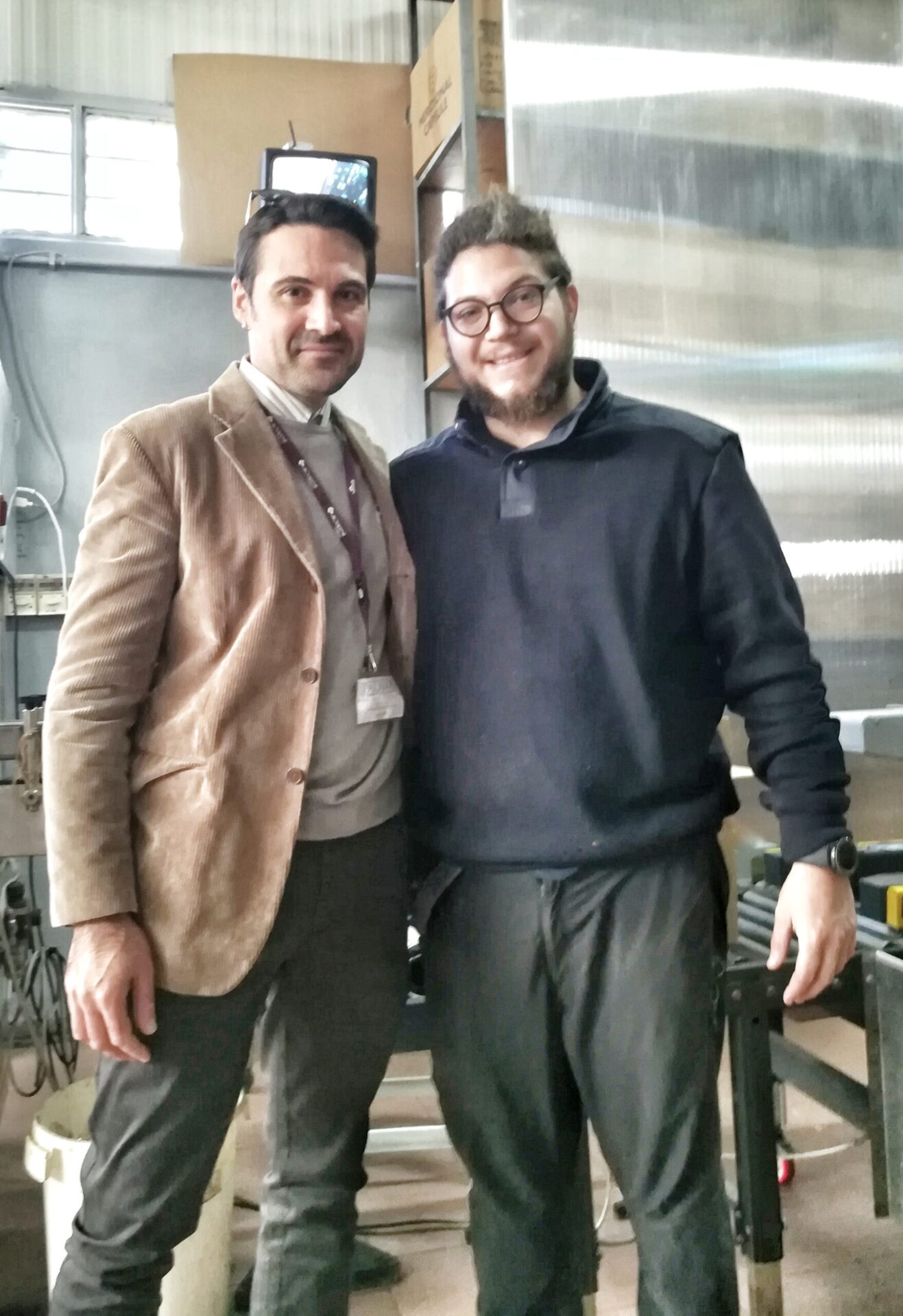
From a Family Garage to 400,000 Bottles: Three Generations of Innovation. This winery started in a literal garage. Arcangelo Palamà — grandfather of current owner Michele — began making wine for his family, then expanded to sell bulk wine from his own Cutrofiano vineyards. When his son Ninì took over in the late 1980s, he revolutionized everything. Ninì created the iconic "Metiusco" line over 30 years ago — the white, red, and rosato versions that became symbols of Salento wine. The Metiusco Rosato didn't just win awards; it defined how traditional "lacrima" (tear-drop) Negroamaro rosé should taste. Since 2010, Michele Palamà has pushed innovation further: barrel-fermented whites and the fresh "Ninì" line. Ask to see the old cement fermentation tanks in the original section — silent witnesses to three generations. Production: ~400,000 bottles/year. A true Salento vacation 2026 highlight, these are among the essential Things to see Salento for wine lovers.
2. Cantine Paolo Leo — San Donaci
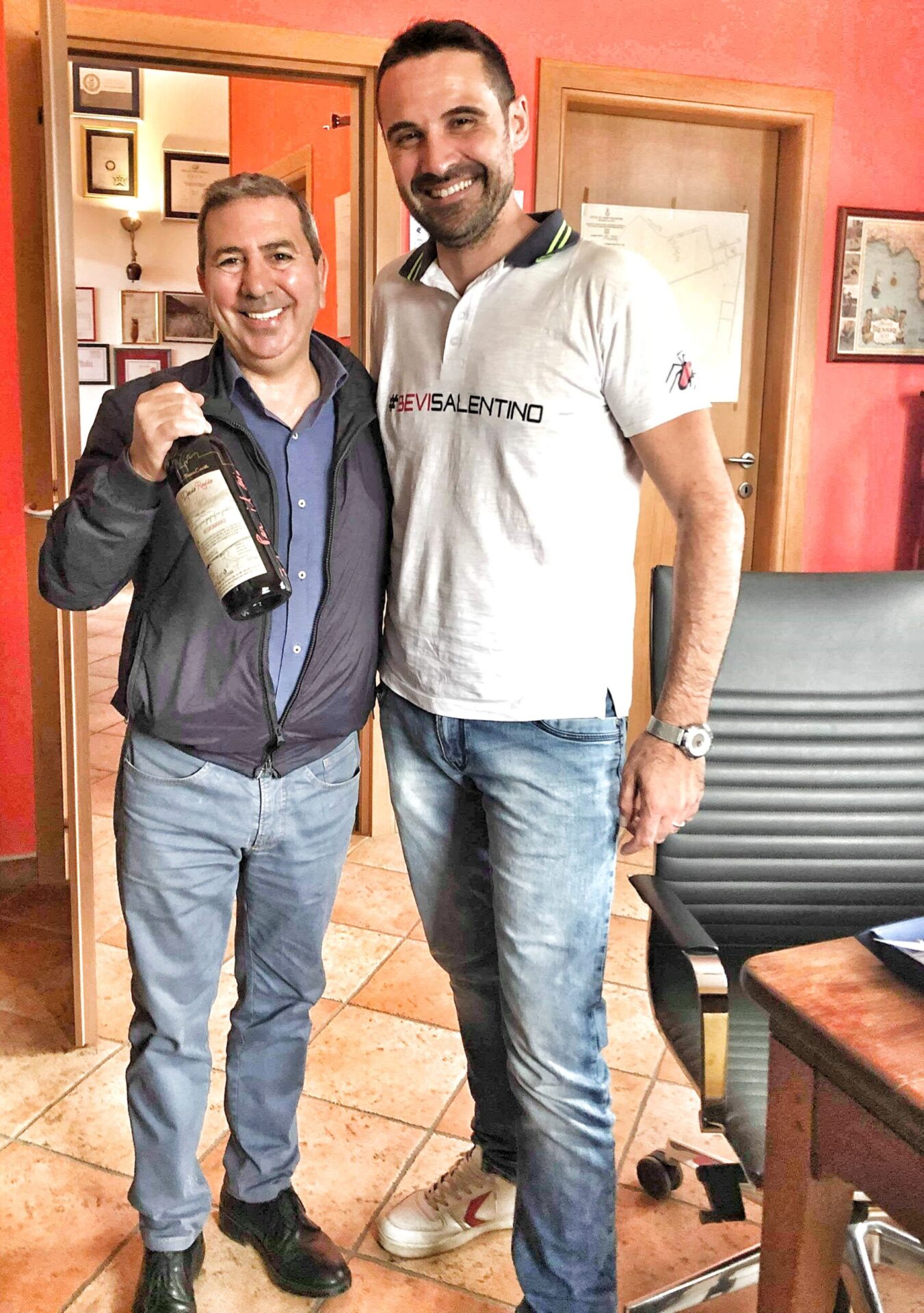
Five Generations, Two Cellars, and the Railroad History of Salice Salentino. Paolo Leo's great-great-grandfather started with a "palmento" (traditional stone press) in the center of San Donaci village — 200 meters from the train station. In the early 1900s, they loaded bulk Negroamaro onto trains heading north to France as "cutting wine." That old village cellar is now their wine shop. You can drink a glass of modern Salice Salentino DOC where their ancestors loaded barrels onto 19th-century trains. Two facilities now: San Donaci (1999, heart of Salice Salentino DOC) and Monteparano (2020, gateway to Primitivo di Manduria DOC). Their range spans both denominations — compare Salice Salentino DOC (Negroamaro-based) with Primitivo di Manduria from their newer facility. What to see in Salento? Start here for a masterclass in terroir. A Guided tour Lecce can easily extend to San Donaci.
3. Tormaresca — San Pietro Vernotico
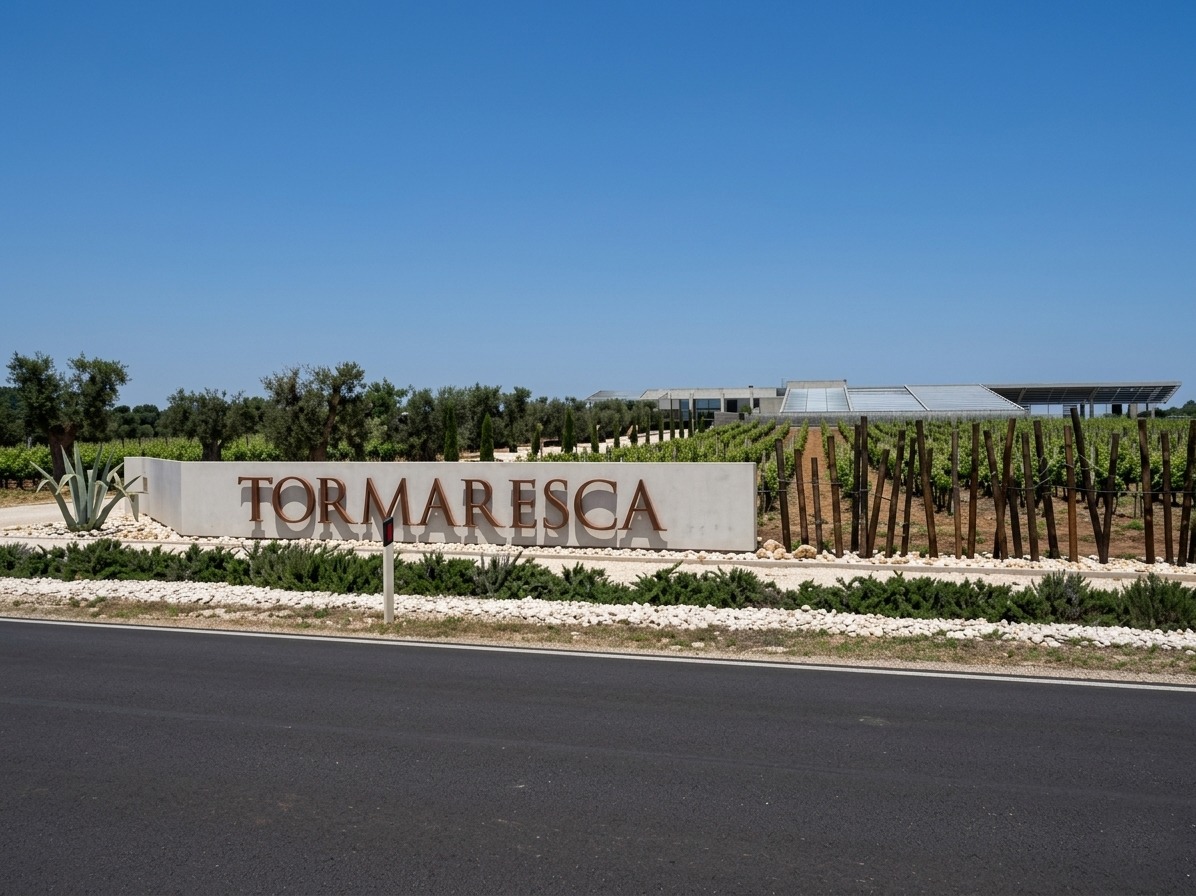
When the Antinori family (700 years of Tuscan winemaking royalty) bought land in Puglia in 1998, they didn't just plant vines — they started a movement. Tormaresca is the only winery with estates in both of Puglia's top wine zones: Castel del Monte DOC and Salento. In 1999, they created Calafuria — the rosato that became the global symbol of "Salento Rosé Made." Salento rosati are the only rosés in the world with significant aging potential. I proved this when I filmed experts tasting a 10-year-old Calafuria — still vibrant. Their estates: Bocca di Lupo (white varieties, mineral soils) and Masseria Maime (indigenous reds, sandy soils near the sea). This is where tradition meets serious investment, with experimental vineyards that have recovered native varieties nearly extinct.
4. Schola Sarmenti — Nardò
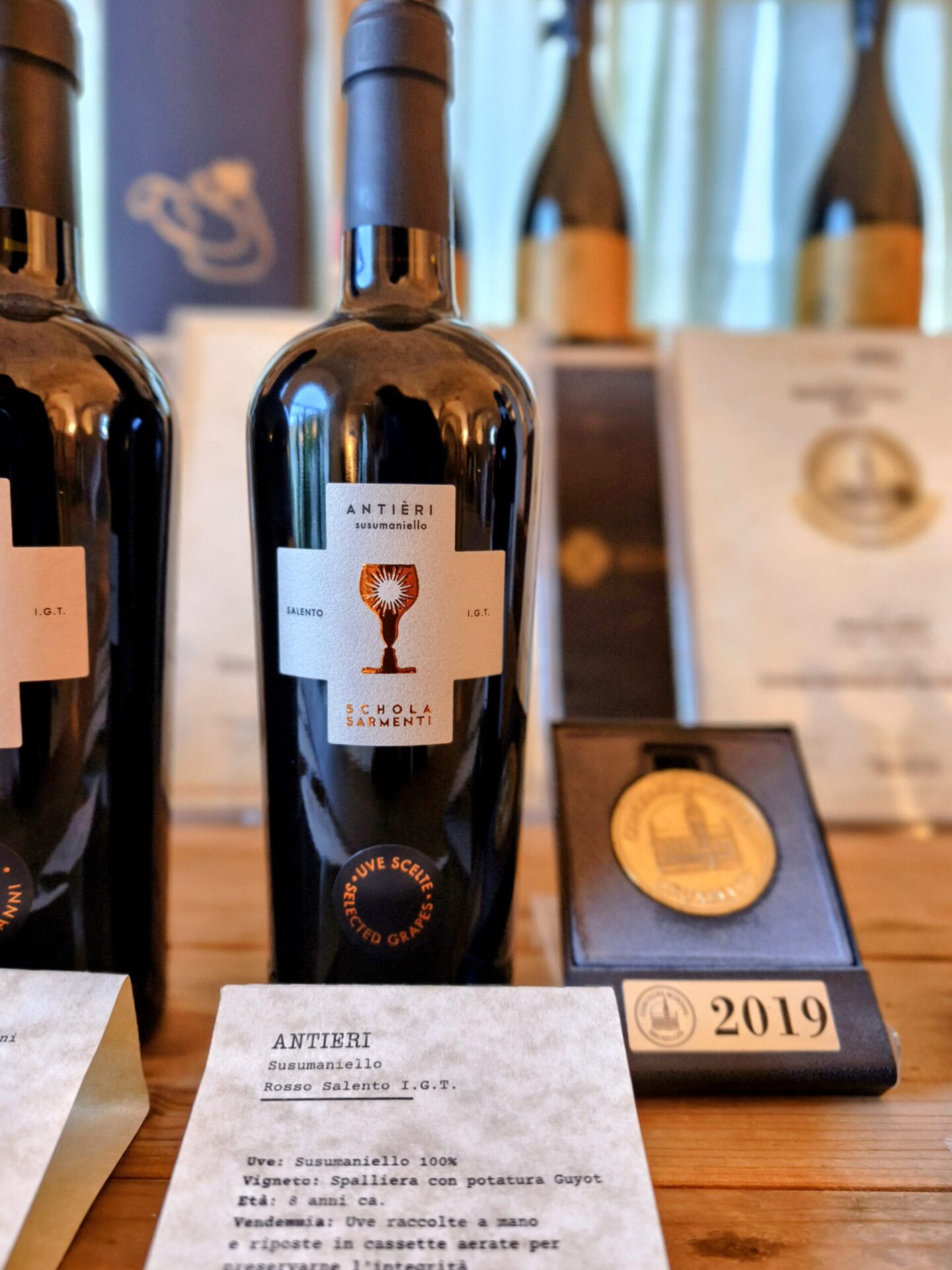
Founded in 1999 by the Marra and Calabrese families, this "young" winery is rooted in ancient vineyards — some over 100 years old, bush-trained (alberello pugliese) survivors that predate the winery itself. Nerio — their Nardò DOC red — hit #93 on Wine Spectator's Top 100 Wines of 2015, scoring 90 points at around $20 while competitors in that ranking cost $100+. That's unheard of for a Salento wine in the US market. Old alberello vines, artisanal methods, zero compromise. A Salento villages tour should absolutely include Nardò to taste the full Nerio vertical — it's a masterclass in how Salento wines age.
5. Vitivinicola Marulli — Copertino
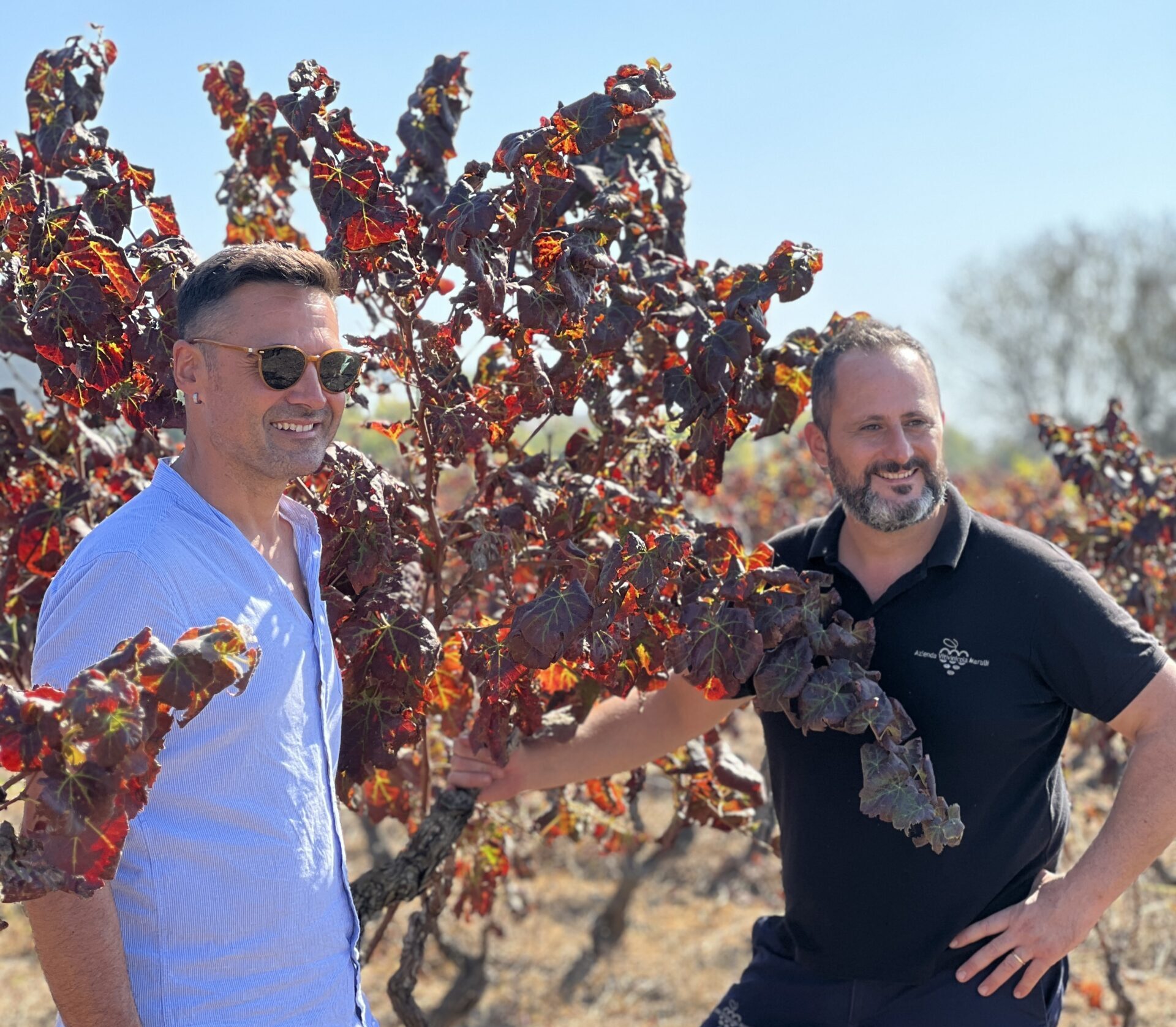
Founded in 1975, but the family worked these Copertino vineyards two generations before that. Today Vito Marulli and enologist Marco Mascellani produce just 60,000 bottles from 25 hectares — micro-production by Salento standards. Menone is their flagship — single 1-hectare vineyard of 90-year-old Negroamaro alberello vines, 3 years aging in buried glass-lined cement tanks, 6 months bottle aging, unfiltered, just 3,000 bottles total production. Before stainless steel and barrique, all Salento wine aged in cement. Marulli is one of the last defending this tradition. The result is pure, austere, rare Negroamaro that tastes like the Copertino countryside smells — blackberries, figs, tobacco, wild herbs.
6. Cantina Candido — San Donaci
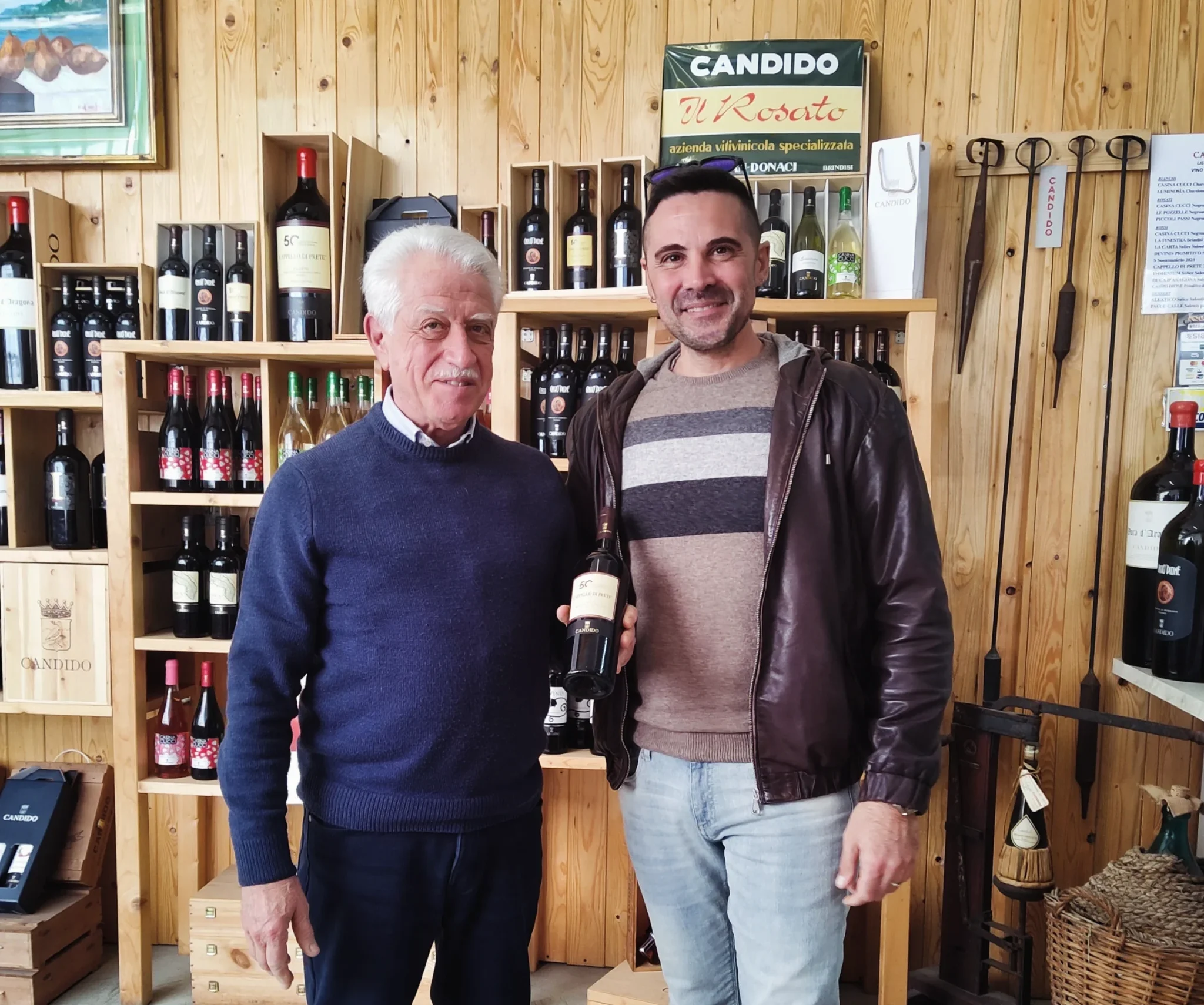
Francesco Candido founded the winery in 1929, but 1957 changed everything — the first vintage they bottled Negroamaro under their own label instead of selling it in bulk to northern blenders. This was radical. At the time, Salento was supposed to provide cheap blending wine, not premium bottled reds. In the early 1970s, brothers Alessandro and Giacomo brought in Severino Garofano, an enologist from Irpinia who sparked Puglia's winemaking renaissance. The icon: "Cappello di Prete" (Priest's Hat) — a pure Negroamaro now at its 53rd vintage. This wine proved Salento could produce serious, age-worthy reds that weren't just "ink" for French wine.
7. Michele Calò e Figli — Tuglie
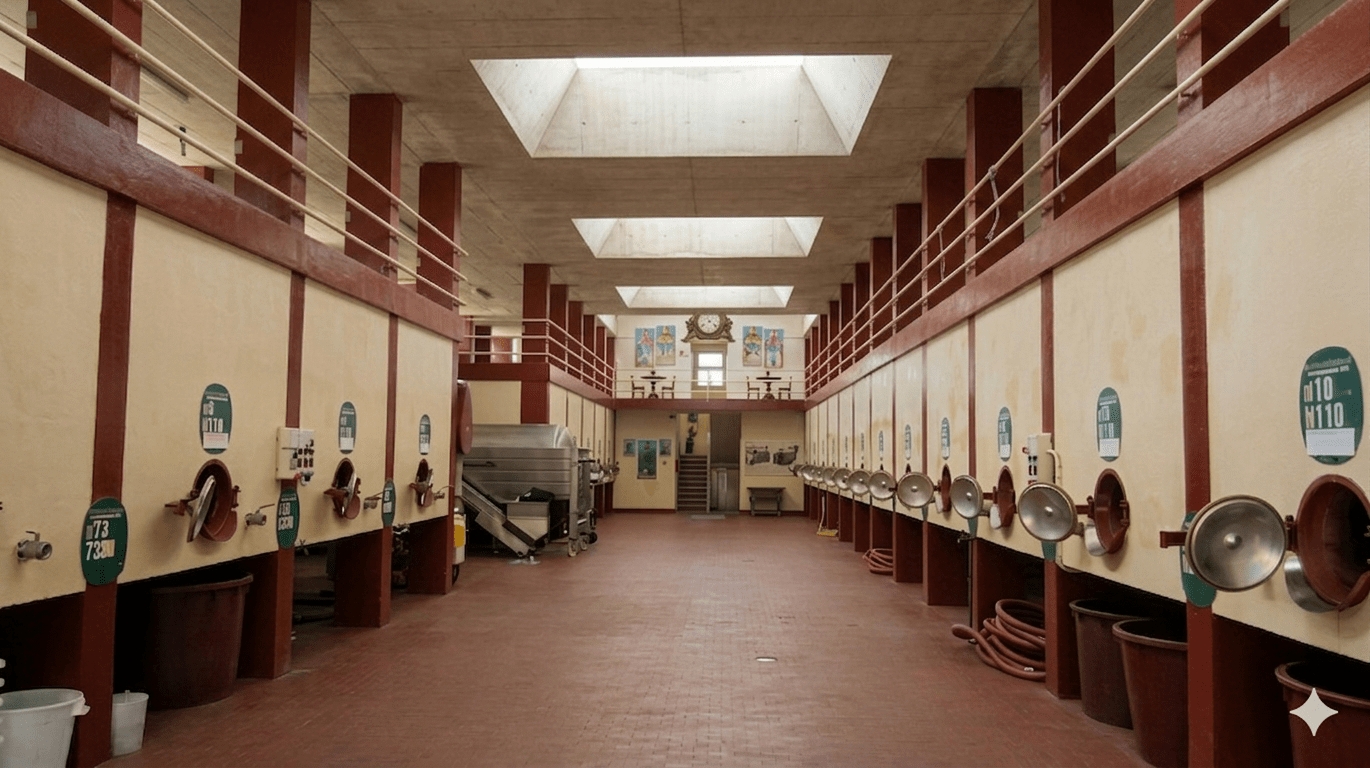
This is the most Italian story in wine. Michele Calò left Tuglie for Belgium in the 1940s — 7 years working in coal mines. Then Milan, where he married by correspondence. In 1954, he opened an osteria in Arluno (near Milan) selling his own Salento wine — 150 hectoliters every 10 days, transported from Tuglie. Today, grandsons Fernando and Giovanni Calò run the 26-hectare estate, producing ~150,000 bottles. They still prioritize the wines their grandfather would recognize: two extraordinary rosati made by traditional lacrima (tear-drop) method — Mjere (dialect for "pure wine") and Cerasa ("cherry" in Salento dialect).
8. Produttori di Manduria — Manduria
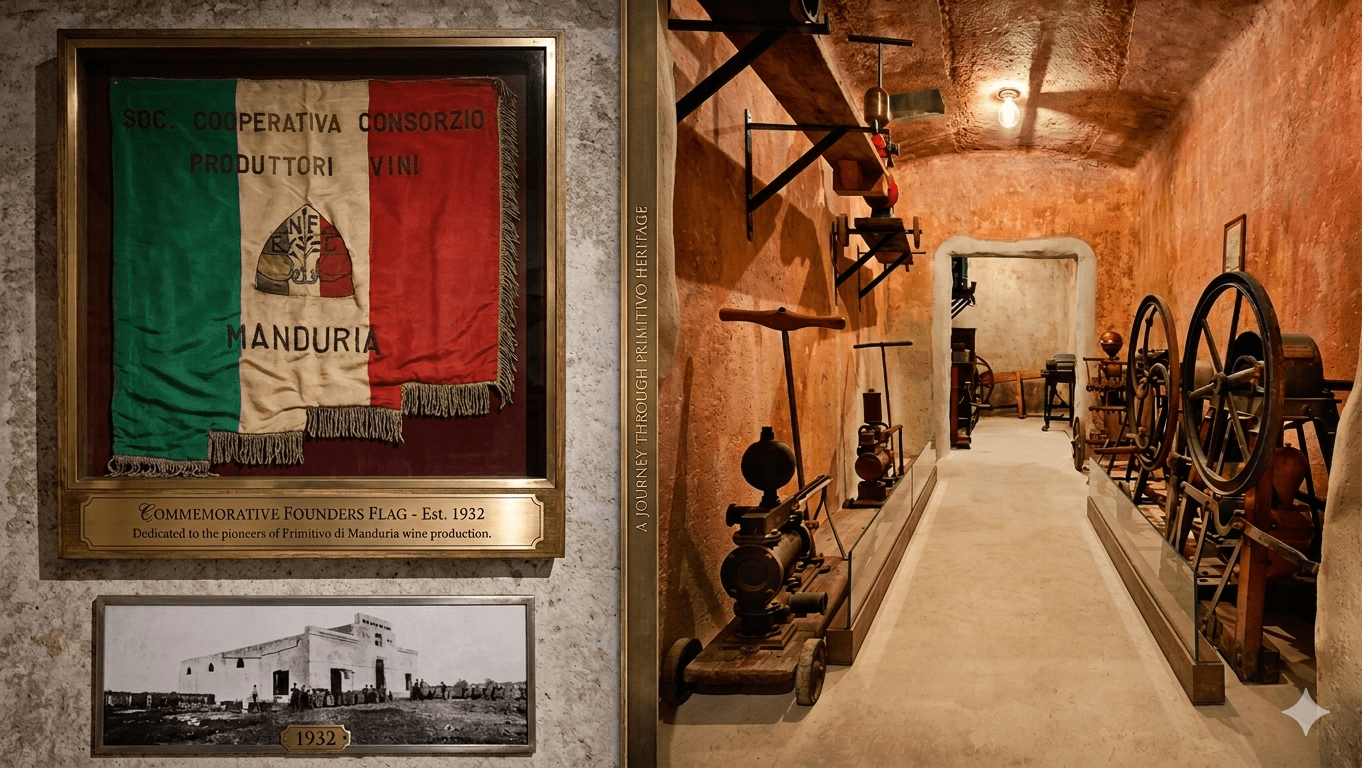
In 1928, a group of "enlightened" growers bought an old facility and created the "Federazione Vini." By 1932, they formalized as a cooperative. But here's what matters: they literally created the Primitivo di Manduria DOC category through decades of advocacy. Before them, Primitivo was just "vino da taglio" for French blends. Today they defend 400 small artisan growers (average 2-3 hectares each), half still using traditional alberello pugliese (bush) training. Their Museo della Civiltà del Vino Primitivo explains that "mjere" in Puglian dialect means pure, unadulterated wine — the direct heir of ancient Roman "merum". Must-try: Primitivo di Manduria DOCG Dolce Naturale.
9. Agricola Vallone — Brindisi / San Pancrazio
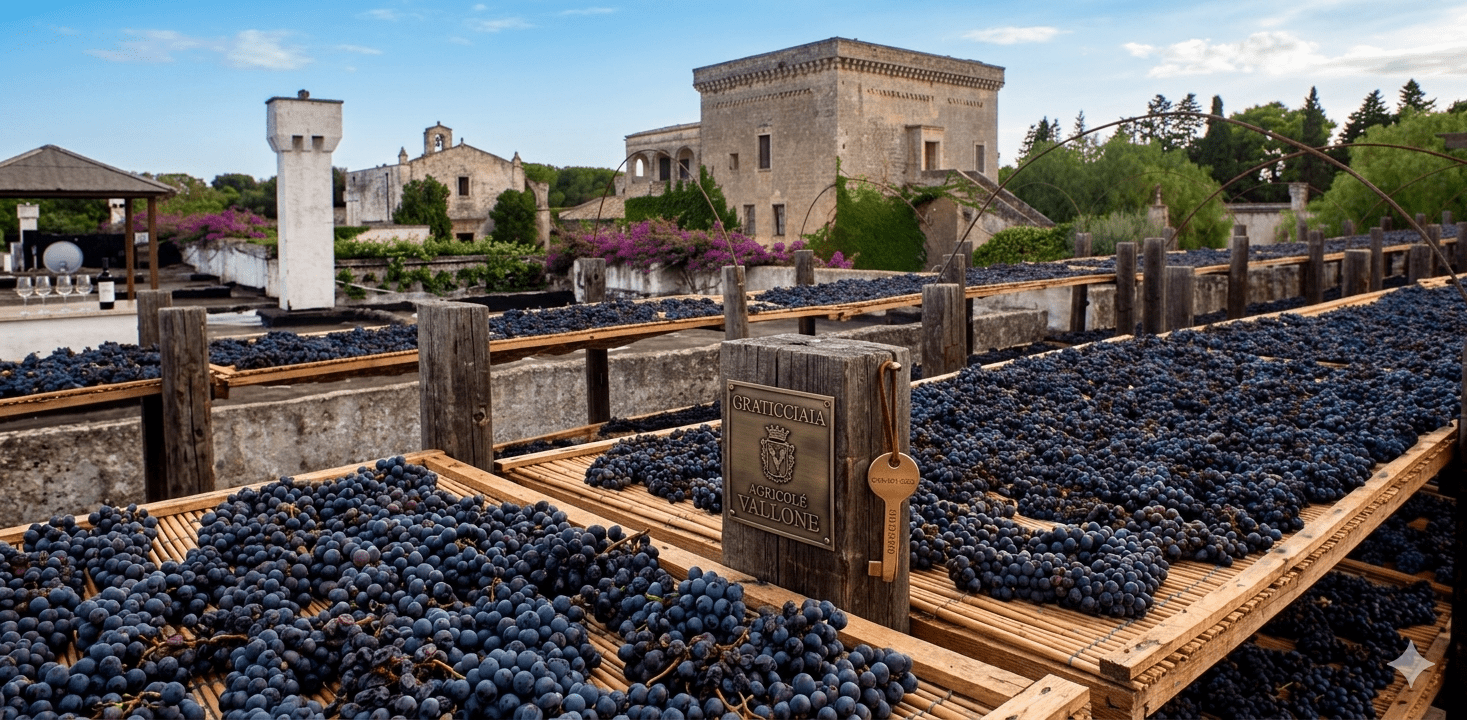
Started in the late 1800s when Commendatore Vincenzo De Marco sold bulk wine to France and Tuscany from San Pietro Vernotico. The 1934 marriage of his daughter Maria to Professor Donato Vallone merged estates. Graticciaia Rosso IGP Salento — one of Salento's most prestigious wines — was born from a technique that almost disappeared. In 1980, enologist Severino Garofano insisted on reviving the appassimento (drying) method for Negroamaro from the "Caragnuli" cru — 80-year-old alberello vines in San Pancrazio. After 6 years of experiments, the first 1986 Graticciaia released. Today it's a benchmark for "serious" Salento red.
10. Masseria Li Veli — Cellino San Marco
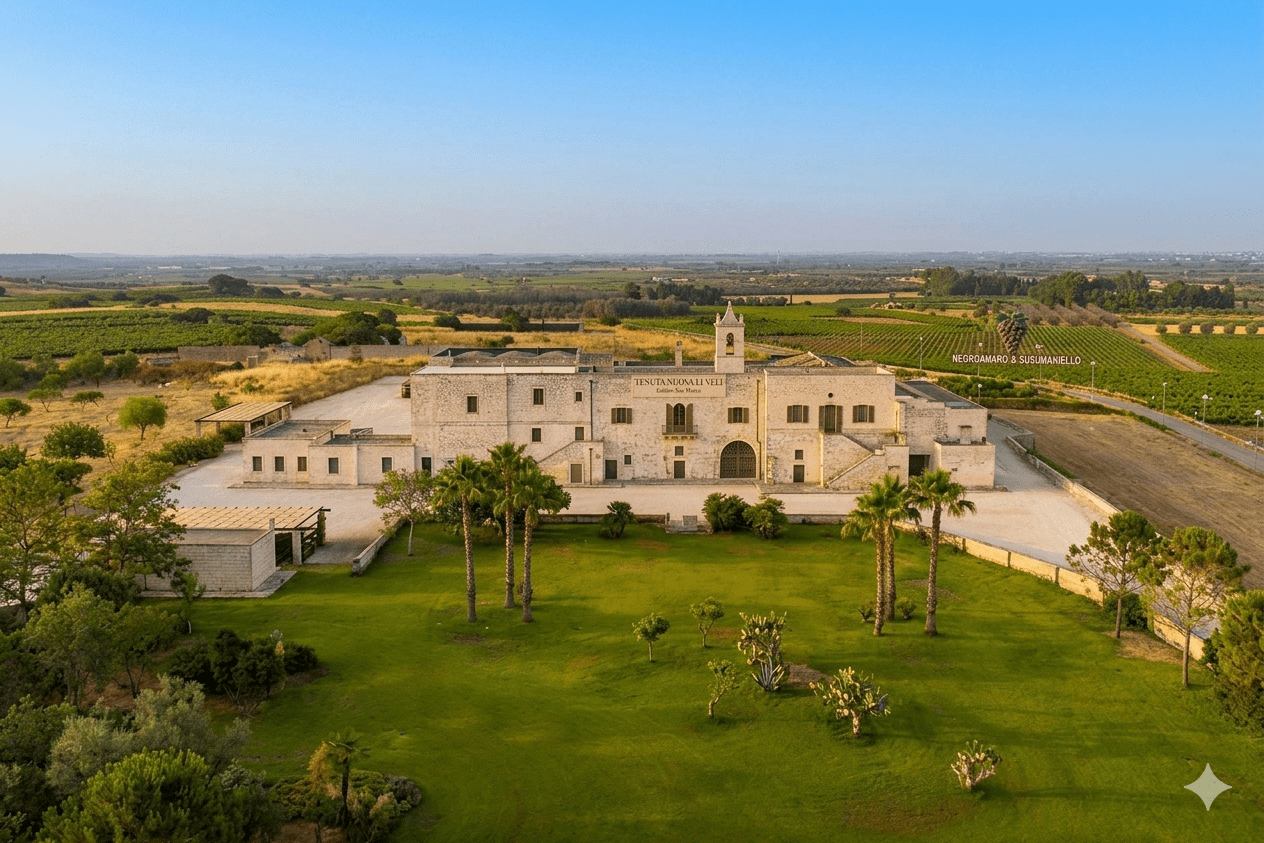
This is Salento's most intellectually romantic winery. Built in the late 1800s by Marchese Antonio de Viti de Marco — internationally famous economist, liberal politician, and anti-fascist. When Mussolini's regime marginalized him, De Viti de Marco returned to Puglia and managed Li Veli personally, writing for Corriere della Sera under the pseudonym "The Winemaker" to criticize the regime. The winery operated until the 1960s, then became a garbage dump. In 1999, the Falvo family (Tuscan wine royalty from Avignonesi) bought and restored it. The restored masseria embodies his vision of Puglia as a model for southern Italian agricultural development.
wine tour salento & Authentic Puglia Experiences
wine tour salento – Book with me (Stefano) for private garden tastings and visits to hidden gems like Marulli and Calò.
wine tour puglia – Combine Salice Salentino, Manduria, and the Valle d'Itria for the ultimate crash course.
wine tasting puglia – Always ask for Susumaniello or Negroamaro rosato — they tell the real story.
wine tasting salento – Look for “Salice Salentino Riserva” and “Primitivo di Manduria Dolce Naturale”.
sea coast tour salento – Pair a morning winery visit with an afternoon at Punta Prosciutto or Torre Lapillo.
puglia on the road – Rent a car; these wineries are scattered across country roads with no public transport. I offer designated driver services.
Puglia food and wine – Don't skip the olive oil. Paolo Leo, Masseria Li Veli, and Produttori di Manduria produce exceptional extra virgin.
Masseria experiences – Stay overnight at a fortified farmhouse near Manduria or Copertino to wake up among the vines.
When to visit – September (harvest), May-June (flowering). Avoid August (too hot, skeleton crews).
Understanding Primitivo vs. Negroamaro
Primitivo means "first to ripen" — jammy, high alcohol (14-16%), dark fruit, spicy. Key zones: Manduria DOC, Gioia del Colle. Famous wines: Primitivo di Manduria DOCG (also Dolce Naturale). Negroamaro means "blackest of the black" (Greek origin) — silky tannins, dark fruit, herbal, saline finish. Key zones: Salice Salentino DOC, Copertino, Nardò. Famous wines: "Cappello di Prete," "Menone," "Graticciaia." For a Puglia 10 day itinerary, dedicate a full day to exploring both styles side by side.
Book a personalized tour with me, Stefano, and I'll take you behind the scenes of these living stories — from 90-year-old alberello vines to cement tanks that have aged wine for half a century. Let's drink Salento together.
Best Wineries in Salento
If you too wish to witness these beauties of Puglia, book your tour with Salentowinetour. Contact us via WhatsApp for a personalized experience crafted around your passions.
Book via WhatsApp