
Salento Rosé: 28 Centuries of Tradition
The ancient "a lacrima" method, the Negroamaro grape,
and the rebirth of Italy's most distinctive pink wine
Planning Puglia holidays? Use this Salento travel guide to discover one of Italy's oldest rosé wine regions. Salento's pink wine tradition stretches back 28 centuries, rooted in an ancient technique that modern winemakers are now celebrating worldwide.
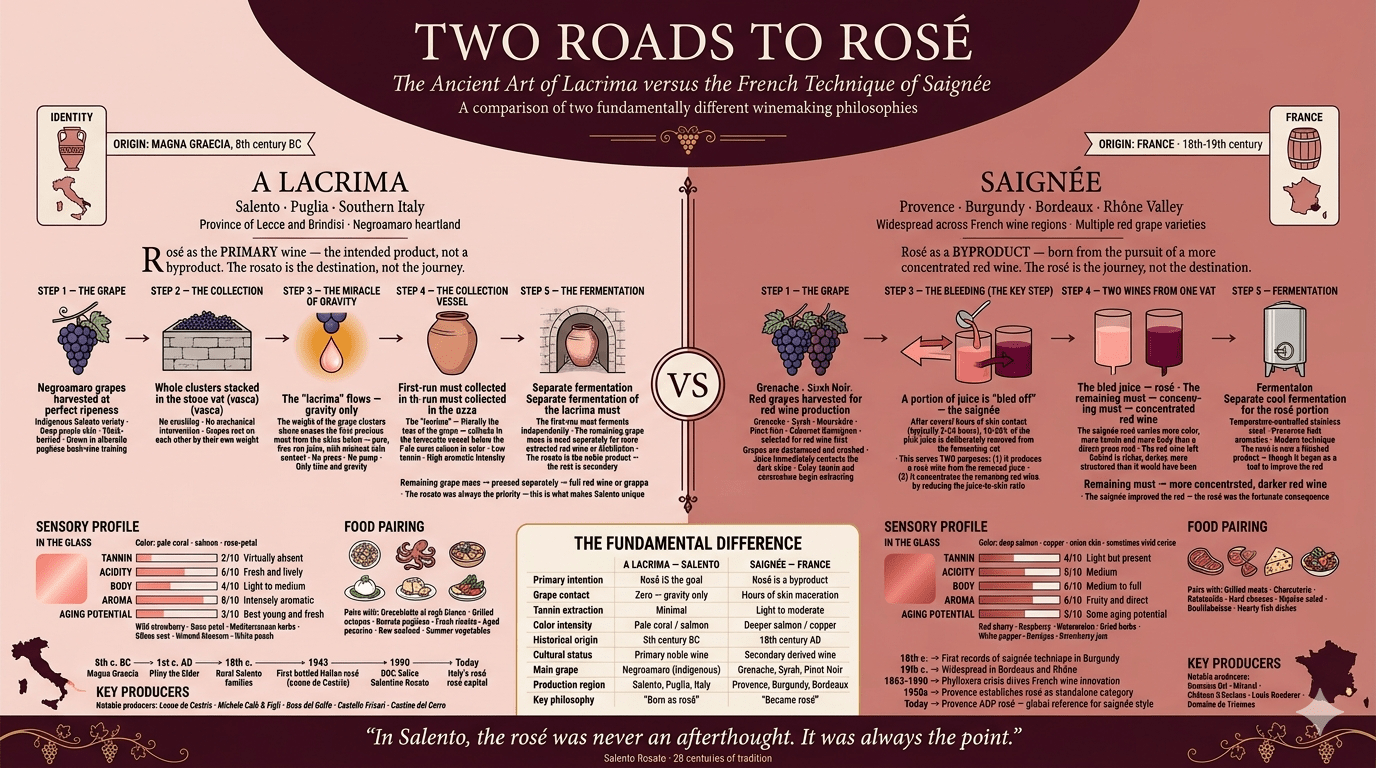
The Salento peninsula, the heel of Italy's boot, has been producing wine for over three thousand years. But unlike most of Europe, where rosé was historically a byproduct of red winemaking, here in Puglia's southernmost territory, pink wine was always the primary goal. The ancient Messapians and later Greek colonists developed a technique called "a lacrima" — from the Italian word for "tear" — that allowed free-run juice to drip gently from black grapes, creating a coral-colored wine of remarkable freshness and finesse. A Lecce guided tour is the perfect starting point for a Salento road trip focused on wine. For travelers seeking authentic Puglia experiences, the rosé heritage of Salento offers something genuinely unique.
This is not a modern marketing story. Archaeological evidence, ancient texts, and continuous oral tradition confirm that Salento's rosé culture predates the Roman Empire. While other regions discovered rosé accidentally through the saignée method (bleeding vats to concentrate red wine), Salento made rosé on purpose, for centuries, as its everyday table wine. The difference is fundamental — and it explains why today, in 2026, Salento is considered the capital of Italian rosé.
The Birth of "A Lacrima" in Magna Graecia
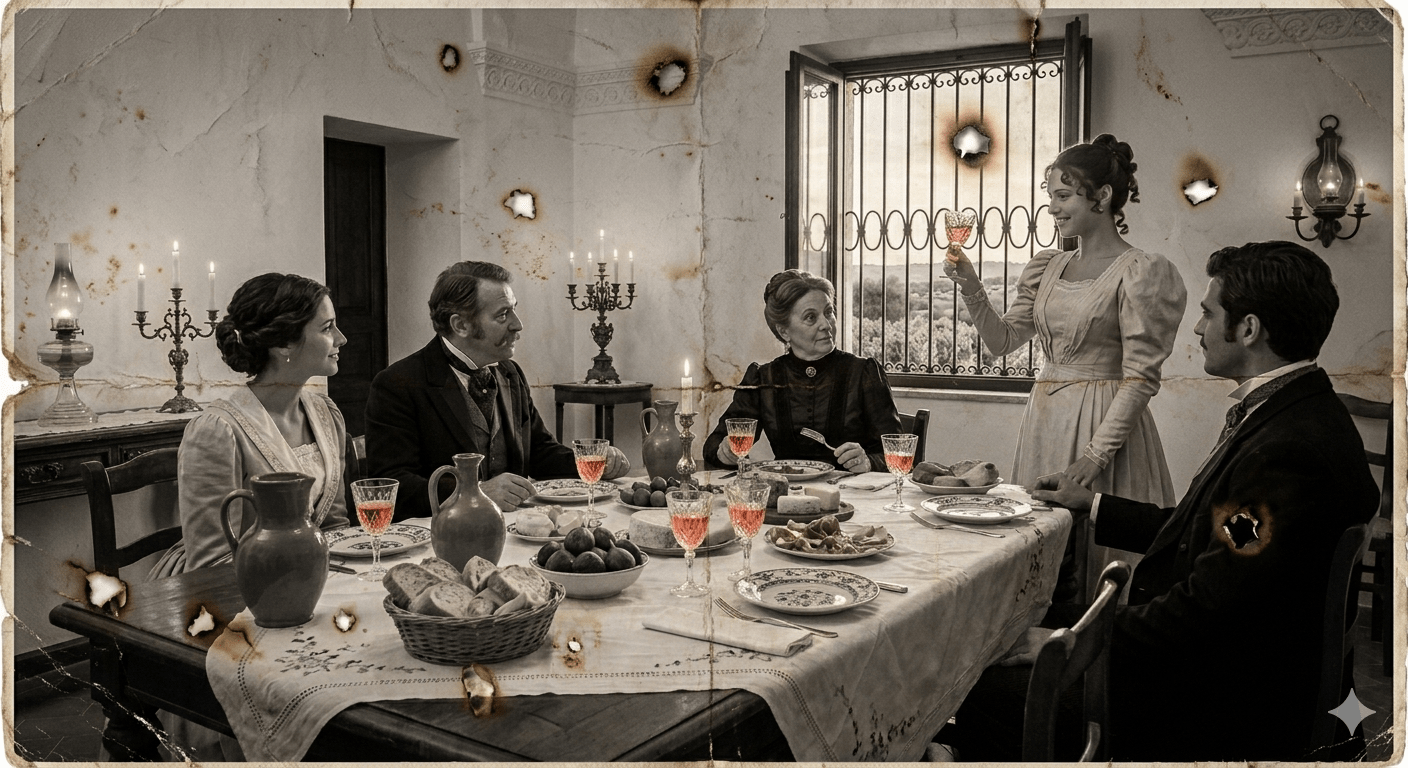
Modern sources agree that "a lacrima" winemaking in Apulia dates back to the Magna Graecia period, when Greek colonists taught Salento farmers to obtain rosé wine by letting black grapes "weep" in collected sacks, with an extremely delicate pressing that allowed only the free-run must to drip through, without prolonged contact with the skins. Some industry authors link this practice to the very origin of the Negroamaro grape variety, believed to have come from the Illyrian area and then spread to Apulia precisely through Greek colonization. A one day tour Puglia focused on wine history should absolutely include this region.
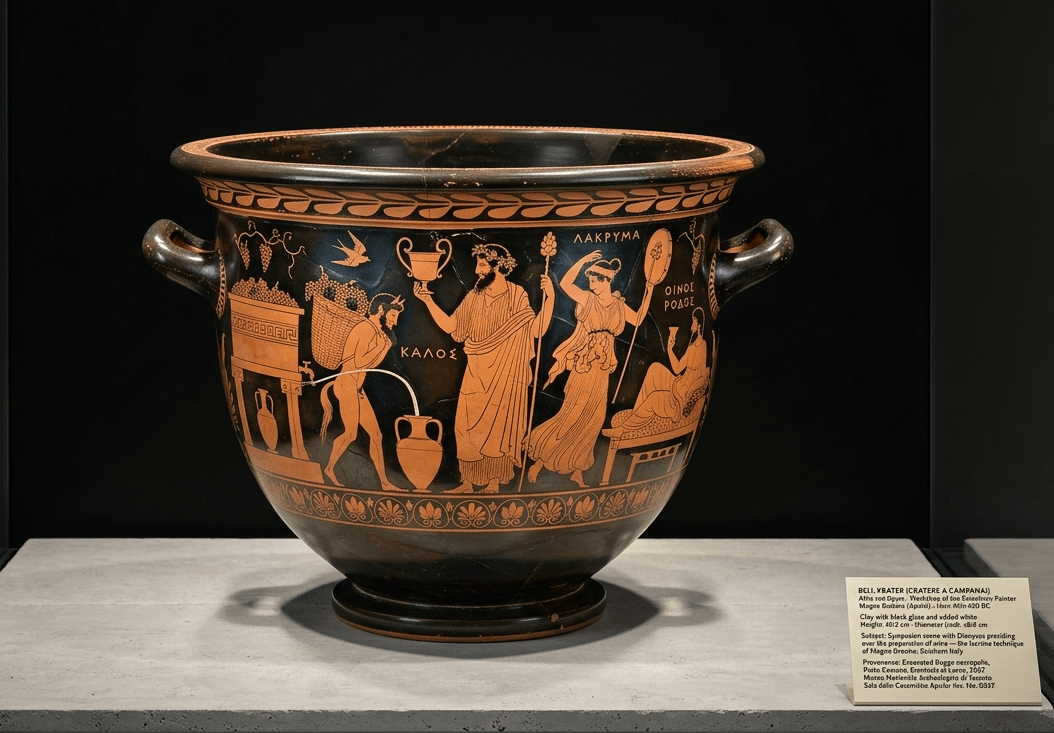
Oenology texts and popular works also reference a late-ancient Latin term: Pliny defines "protropum" (very young, not yet fermented must) and Columella defines "mostum lixivium", which some scholars interpret as a reference to precisely this type of "drained" must of light color, anticipating the lacrima practice. From this perspective, Salento rosé is not a modern derivative of red wines, but a "primary" wine, born with the very oenology of the territory. A well-planned Puglia itinerary will naturally include the towns where this ancient tradition still thrives. For those exploring further, a Tour Valle d'Itria combined with Salento's wine country makes for an unforgettable journey.
The "A Lacrima" Tradition in Salento
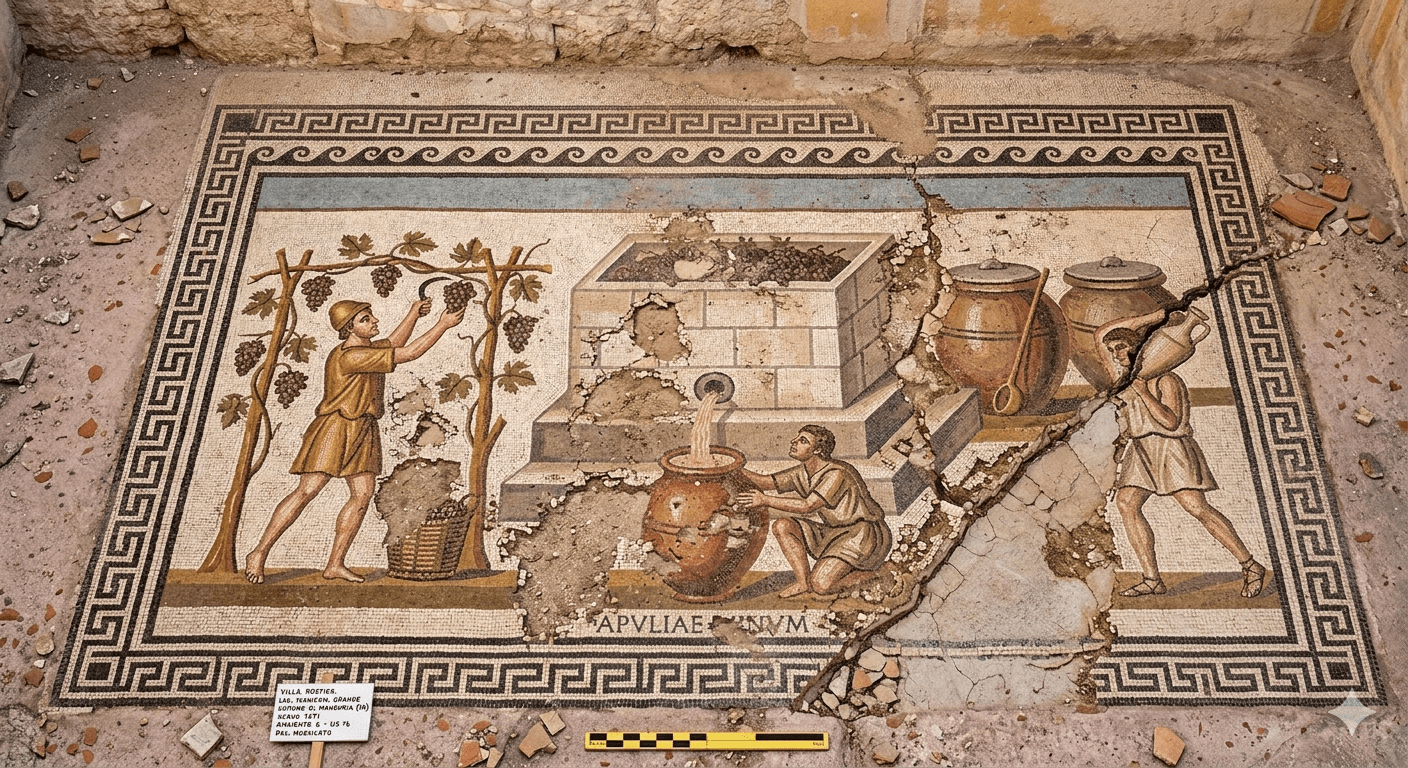
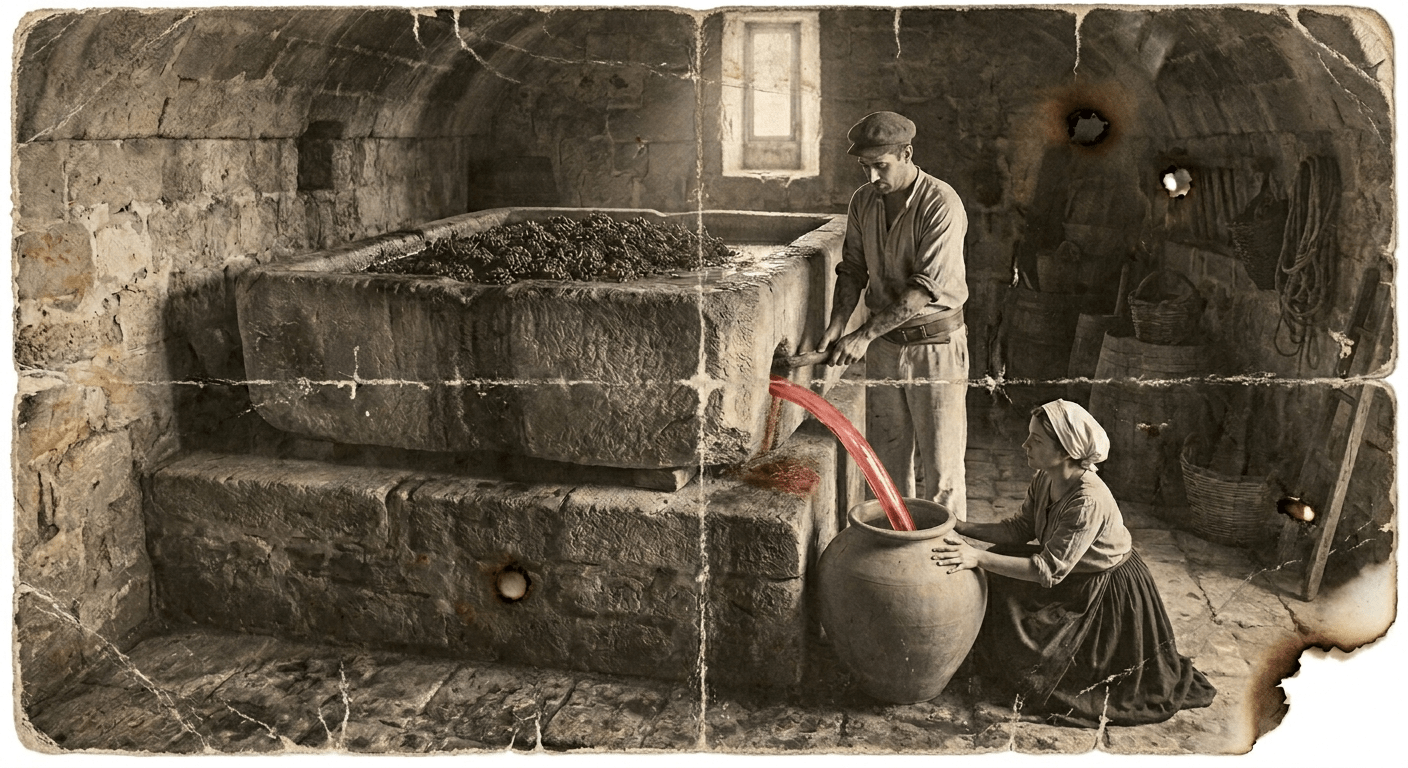
In Salento, the "a lacrima" practice is particularly linked to Negroamaro, an indigenous grape variety widespread throughout the area between Lecce and Brindisi. The traditional process involved harvesting the grapes in sacks or hoppers; light pressing or simple layering in vats, so that only the initial "lacrimated" must came out by gravity; and separate fermentation of this first must, coral pink in color, while the remaining must was used for more extractive products or for distillation. Travelers searching for Salento vacation 2026 will find that the best time to witness rosé production is during the late summer harvest.
This system produced a low-tannin, fresh, easy-drinking rosé, highly appreciated in families and rural communities — so much so that in the 19th and early 20th centuries, bulk rosé was a daily presence in peasant homes and among the rural bourgeoisie of Salento. These are the kinds of things to see Salento that reveal the region's true character.
Phylloxera and the Boom of Salento Wine
In the second half of the 19th century, the phylloxera infestation devastated French vineyards, destroying a large part of Europe's vineyard surface and creating massive demand for wine from countries still immune. Apulia, and Salento in particular, became "reservoirs" of wine for France and other markets, with production rising from about 12 million hectoliters to just a few million in a few years, once Apulia itself was hit by phylloxera. Understanding this history is essential for anyone asking what to see in Salento beyond the beaches.
During this period, Salento grew as a national production hub, but the push was mainly toward bulk red wine for export; rosé remained a more local product, appreciated locally but not yet part of large commercial volumes. Phylloxera, however, changed the territory's physiognomy: it pushed toward the conversion of vineyards onto American rootstocks and imposed a more technical reflection on grape management and vinification, indirectly favoring the specialization of rosé in the following decades. A guided tour Lecce can help visitors connect these historical dots while exploring the city's Baroque treasures.
Greek colonization brings vine and "a lacrima" technique to Salento
Pliny and Columella describe "free-run must" practices
"A lacrima" transmitted orally; bulk rosé in peasant families
Phylloxera in France; Apulia becomes Europe's wine supplier
Leone de Castris produces Five Roses — first bottled Italian rosé
Primitivo di Manduria receives DOC status
Primitivo di Manduria Dolce Naturale awarded DOCG
The villages where this history unfolded are perfect destinations for Salento villages tour — explorations of Salento's most charming historic towns, each with its own wine story to tell.
Lacrima vs Saignée: Two Philosophies of Rosé
The "saignée" (bleeding) technique is now used in many regions of the world to produce rosé wines: during the maceration of black grapes for red wine, part of the must is drawn off, typically after a few hours, to obtain a rosé wine and simultaneously concentrate the remaining red wine. In the French context, rosé was often born as a byproduct of the search for more full-bodied reds.
In Salento, however, the "a lacrima" tradition is considered an independent and earlier practice: here, rosé was for centuries the main wine, while the rest of the must was complementary. Some industry texts speak of a "double vision": French saignée rosé → a byproduct wine, improved in quality over time; Salento a lacrima rosé → an original wine, conceived as a product in its own right, with the residual part treated as secondary material. This explains why the region has become a reference point for wine tasting Puglia experiences.
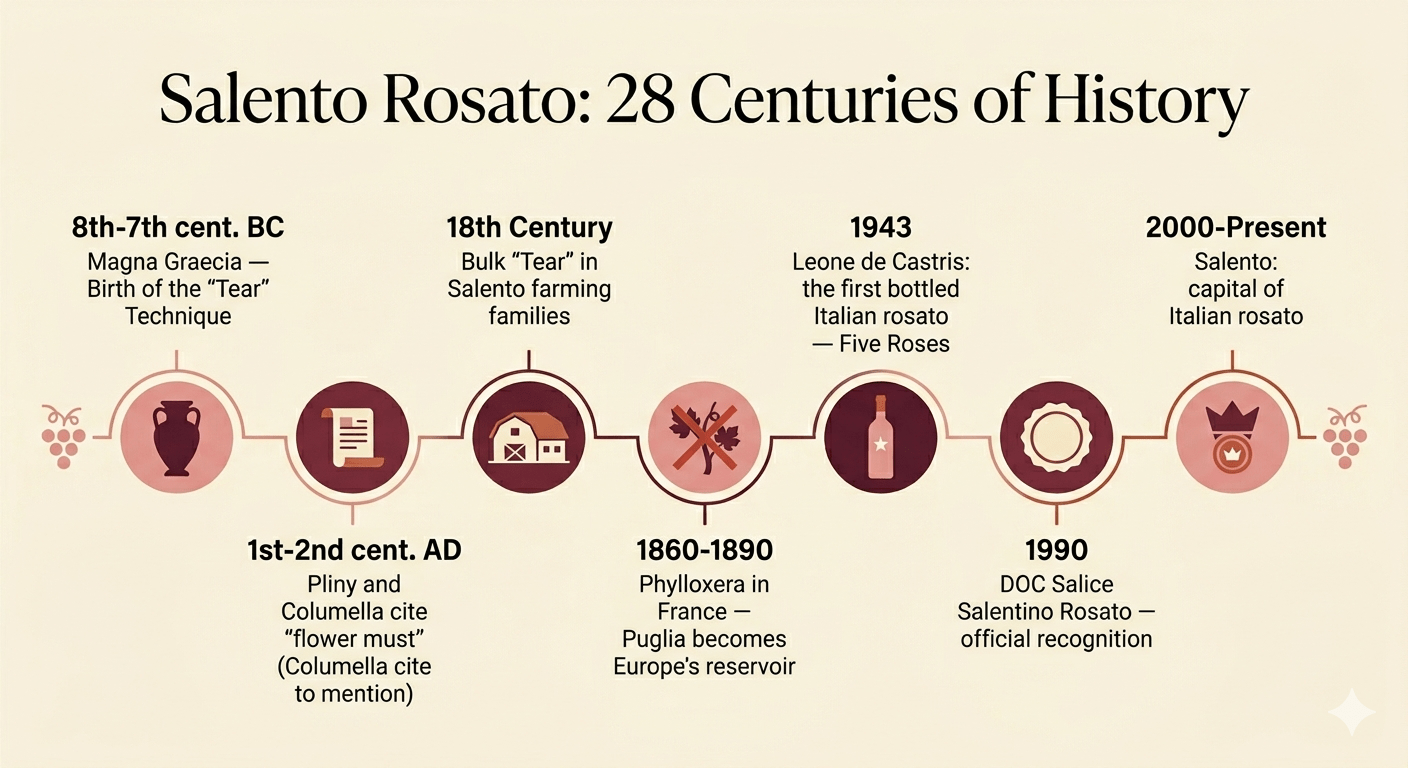
28 Centuries of Salento Rosé History
The journey from Magna Graecia to the present day spans 28 centuries. Key milestones include the arrival of the vine with Greek colonists (8th–7th century BC), the written testimonies of Pliny and Columella (1st–2nd century AD), the medieval continuation of the "lagrima" tradition in peasant families, the phylloxera crisis that reshaped European viticulture, the first bottled rosé by Leone de Castris in 1943, and the modern recognition of Salento as Italy's rosé capital. A Puglia 10 day itinerary could easily be built around these historic wine milestones.
Planning Your Salento Rosé Journey
How to Experience Salento Rosé Authentically
Book a dedicated wine tour salento experience. Local experts can guide you to the most authentic producers who still practice the "a lacrima" method. A specialized wine tour puglia will take you beyond the tourist trail to family-run estates where centuries-old techniques are still alive.
Combine wine with coastal exploration. A sea coast tour salento pairs perfectly with vineyard visits — the same Mediterranean breezes that shape the grapes also create Puglia's stunning shoreline. Consider puglia on the road as your travel style, giving you flexibility to move between coastal towns and wine country.
Look beyond the glass to the plate. A Puglia food and wine approach — combining culinary and wine experiences — will deepen your appreciation. Salento rosé pairs beautifully with local seafood, orecchiette pasta, and the region's famous olive oil. A comprehensive wine tasting salento itinerary should always include food pairings.
Stay in a historic farmhouse. Masseria experiences offer the most authentic immersion — many of these fortified farmhouses have their own vineyards and produce rosé using traditional methods. You'll wake up among the olive groves and vines that define this landscape.
Time your visit for harvest season. Late September through October is when the "a lacrima" magic happens — you can watch grapes being gently pressed and taste the first juice of the new vintage. This is also when the weather is ideal for both vineyard walks and coastal excursions.
For those who love rosé, Salento is not a destination — it is a pilgrimage. The combination of ancient technique (a lacrima), indigenous grape (Negroamaro), and a climate uniquely suited to producing fresh, aromatic pink wines has created something that cannot be replicated elsewhere. When you taste a Salento rosé, you are tasting history: three thousand years of farmers, colonists, monks, and winemakers who understood that some wines are not meant to be big or bold, but beautiful, delicate, and true to the land that made them. From the streets of Lecce to the vineyards of Guagnano, from the Roman ruins to the Baroque churches, the story of rosé is written into the very fabric of this extraordinary region. Whether you are a seasoned oenophile or a curious traveler, the rosés of Salento await — and they are worth every one of those 28 centuries.
Salento Rosé: 28 Centuries of Tradition
If you too wish to witness these beauties of Puglia, book your tour with Salentowinetour. Contact us via WhatsApp for a personalized experience crafted around your passions.
Book via WhatsApp