
The Carob Tree: A Botanical Treasure of Puglia and Salento
An evergreen sentinel that guards the history, biodiversity, and culinary traditions of Southern Italy — from "poor man's chocolate" to a scientifically proven superfood for metabolic health.
✦ Ceratonia siliqua · Centuries-old protected species · The origin of the "carat" ✦
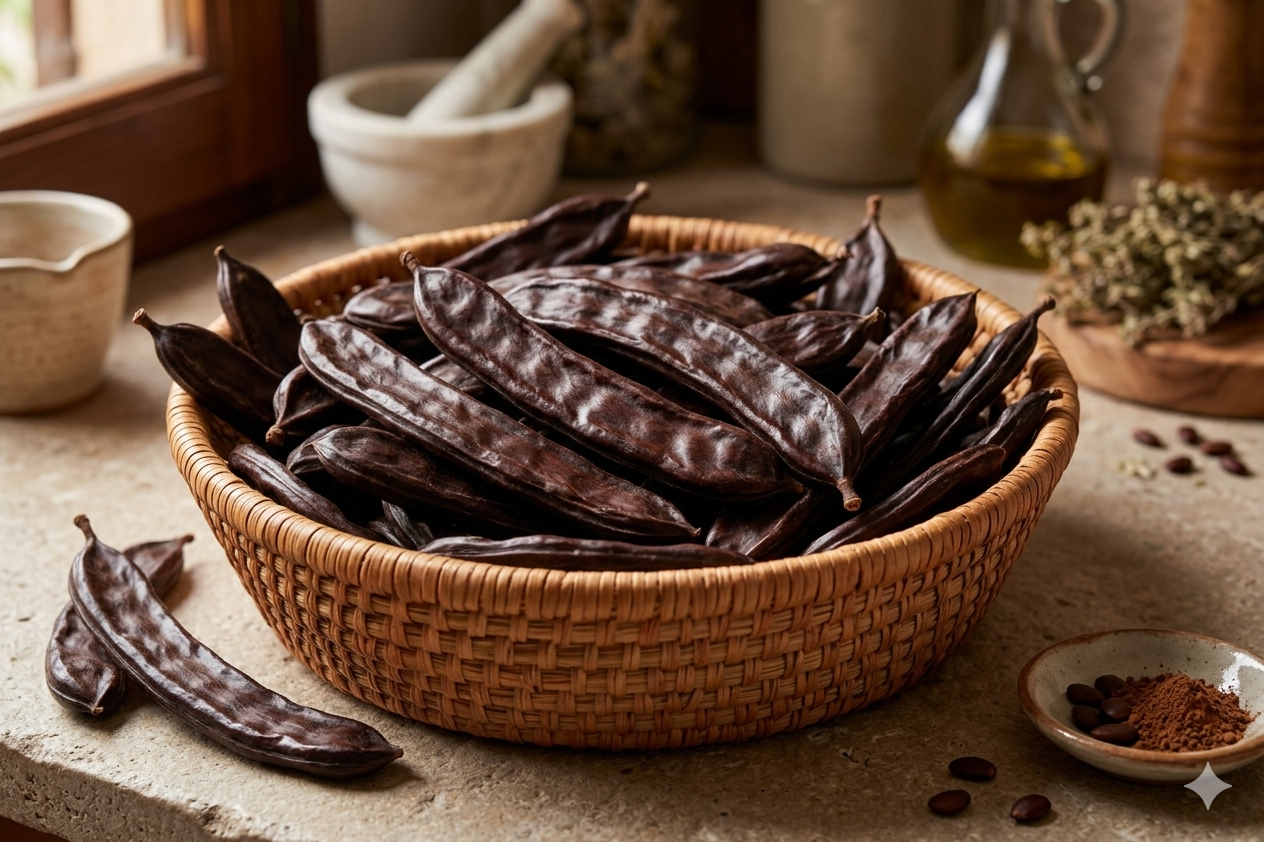
The carob is an "almost forgotten fruit." Yet, many consider the flavor of its sweetish pulp to be even better than chocolate. Not too long ago in Puglia, it was known as the "poor man's chocolate." As a botanist, I invite you to observe the Carob tree (Ceratonia siliqua) with new eyes — an evergreen sentinel that has guarded the history and biodiversity of the Mediterranean for millennia.
✦ Once harvested and shredded, it is ground into a powder remarkably similar to cocoa. Today, some still keep this ancient rural tradition alive, using carob flour to bake delicious desserts like mostaccioli. ✦
Botanical Classification and Origins
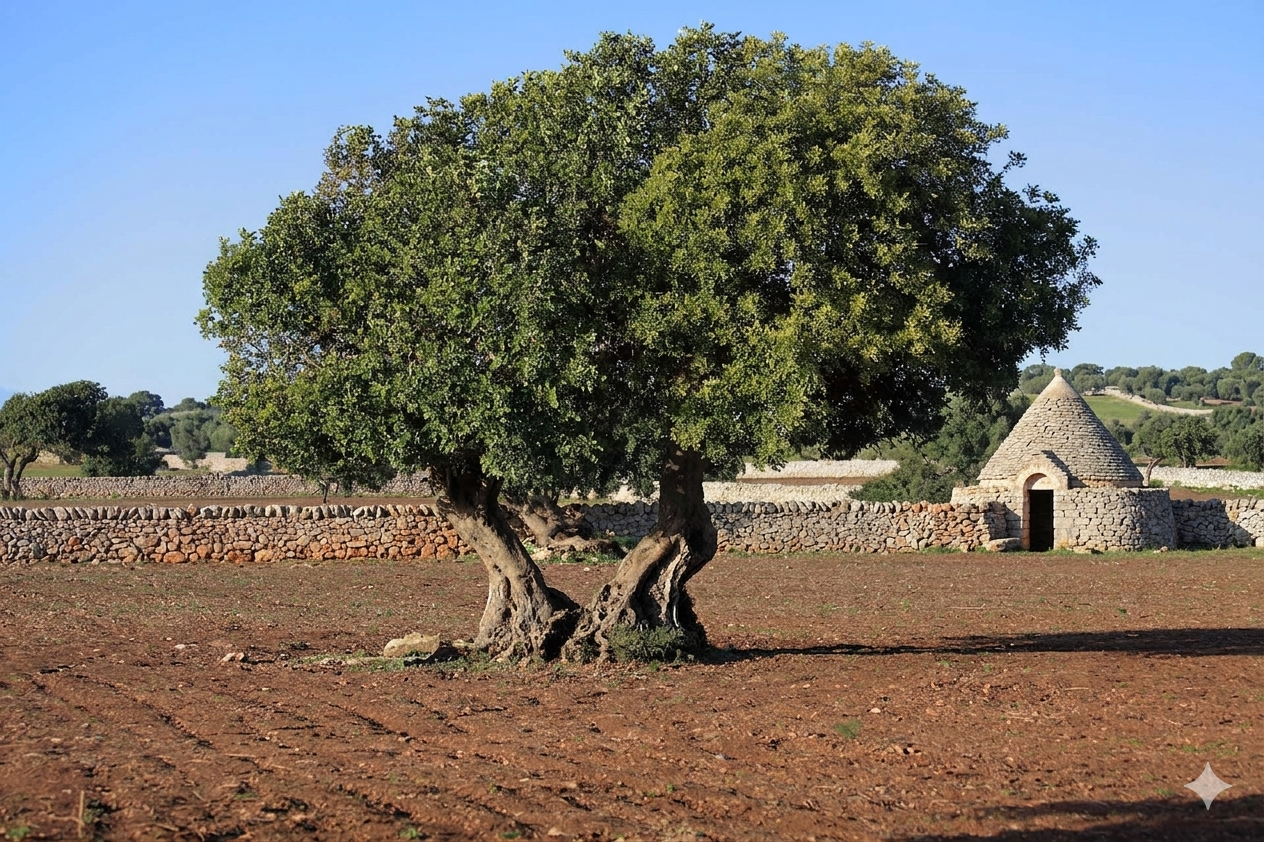
Belonging to the Fabaceae family — the same as common legumes — the Carob tree is a dioecious evergreen that can live for centuries. Originally native to the Levant (modern-day Syria), it found its elective home in the Mediterranean basin, from North Africa to the rugged coasts of Puglia and Salento.
While often reduced to an ornamental role in modern gardens, the Carob is a pillar of the macchia mediterranea, capable of thriving in arid soils where other species would perish. It adapts perfectly to drought-prone climates, easily tolerating the intense, scorching heat of the August sun. Its cultivation has a low environmental footprint, making it a perfect example of a plant that benefits both human health and the planet (One Health).
The Fruit: A Nutritional Masterpiece
The fruit, known as the carob pod, is technically a legume. In the rural tradition of Southern Italy, it was once a staple, yet today it is a "forgotten superfood" waiting to be rediscovered. Its phytochemical profile is nothing short of extraordinary:
- Gluten-Free: The flour derived from grinding the dried pods is naturally safe for those with celiac disease.
- Natural Sweetener: With its caramel-like notes, it is a perfect low-calorie substitute for cocoa, lacking the stimulants like caffeine or theobromine found in chocolate.
- Fiber and Polyphenols: It is exceptionally rich in antioxidants and soluble fibers that promote metabolic health.
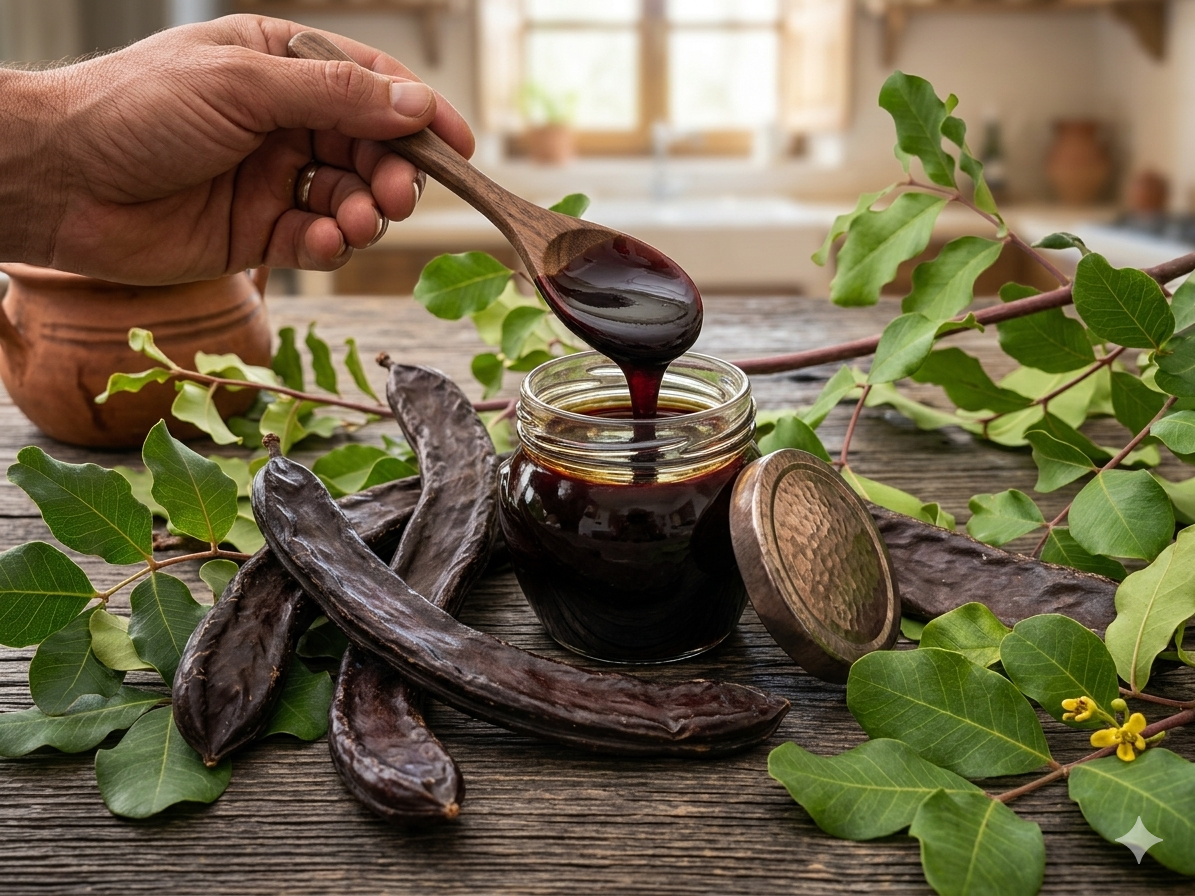
They also craft a special syrup — a natural remedy for seasonal ailments like coughs and sore throats — passed down from mother to daughter for generations in Puglia and beyond.
Health Benefits: What the Science Says
We should all start eating carob again, as it is packed with compounds that are highly beneficial to the human body. The insoluble fibers found in its phenolic compounds and inositol actively promote metabolic health.
Fun Fact from History: Berber doctors and ancient Egyptians even used carob to treat dysentery. Furthermore, chewing on carob has a relaxing effect.
Therapeutic and Dietary Applications
From a clinical perspective, the carob is a functional food. Its high tannin content acts as a natural regulator for intestinal functions, while its alkaline nature helps combat gastric acidity and digestive discomfort. In 2026, it is gaining traction in weight management diets. The carob contains specific enzymes that trigger a sense of satiety, making it an ideal ally for mindful eating.
Nature's Gold and Longevity
Did you know that carob seeds are called "carats"? In ancient times, they were actually used as the unit of measurement for gold! The Carat — the unit of measurement for gemstones — derives its name from the carob seeds (keration in Greek), which were so uniform in weight that they were used as scales in ancient times.
Farmers used to scatter carob seeds across the countryside because, once rooted, they grew into trees capable of living up to 500 years. In Puglia, the carob tree is considered so vital that a regional law (Art. 18 L. R. 04/06/2007) officially classifies these ancient, centuries-old trees as a protected species.
| Property | Benefit |
|---|---|
| Hypocaloric | Excellent for weight loss diets |
| Gastro-protective | Reduces acidity and reflux |
| High Satiety | Reduces hunger cravings |
| Bio-Available Minerals | Rich in Calcium, Potassium, and Iron |
Carob in the Kitchen: From Mostaccioli to Molasses
Today, some still keep this ancient rural tradition alive, using carob flour to bake delicious desserts like mostaccioli — traditional spiced biscuits that have been enjoyed in Puglia for centuries. They also craft a special syrup — a natural remedy for seasonal ailments like coughs and sore throats — passed down from mother to daughter for generations.
Traditional Carob Mostaccioli
Carob flour, almonds, orange zest, and spices come together in this ancient Pugliese recipe. The result is a dense, aromatic biscuit that pairs perfectly with a glass of sweet wine or an afternoon espresso.
✨ Ask a local nonna — she still makes them following her grandmother's recipe.
Dr. Stefano's Tip: While exploring the Salento countryside, keep an eye out for ancient carob trees along the dry stone walls. The best time to spot them is during a wine tour through the vineyards — many centuries-old carob trees stand as silent guardians at the edges of the Primitivo and Negroamaro vineyards.
Botanical Wine Tour
Let us guide you through the ancient landscapes of Salento, where carob trees, olive groves, and Mediterranean maquis tell the story of our land. Combine wine tasting with a journey through Puglia's extraordinary botanical heritage.
BOOK YOUR BOTANICAL TOURThe carob tree (Ceratonia siliqua) is protected by regional law Art. 18 L. R. 04/06/2007 in Puglia. Its centuries-old specimens are considered living monuments of the Salento landscape.
