
Lecce: The Complete Guide to Puglia's Baroque Capital
From Messapian walls and Roman amphitheaters
to the golden stone masterpieces of Leccese Baroque
For those planning Puglia holidays or seeking an authentic Salento travel guide, Lecce is an unmissable destination. Known as the "Florence of the South," this extraordinary city has been sculpted by hand from honey-gold stone over 28 centuries of continuous civilization.
Lecce, capital of the province of the same name in Puglia, is known as the "Lady of Baroque" for its ancient origins and unique artistic heritage carved from the characteristic pietra leccese — a warm golden-yellow Miocene limestone (20-5 million years old), soft and porous enough for elaborate intarsia, quarried from the area between Maglie and Cursi. The city boasts a millennial history, from the Messapian period through 17th-century Baroque to modern developments, immersed in a Salento landscape of centuries-old olive groves, dry-stone walls, and crystalline rocky coasts. A Lecce guided tour is the best way to uncover these hidden treasures, making it a highlight of any Salento road trip.
This enriched report integrates historical, architectural, landscape, and cultural details for a comprehensive guide. For travelers seeking authentic Puglia experiences, Lecce offers a journey into the heart of Salento's artistic soul — a city where every stone tells a story spanning 28 centuries.
Ancient Origins: From Messapians to Romans
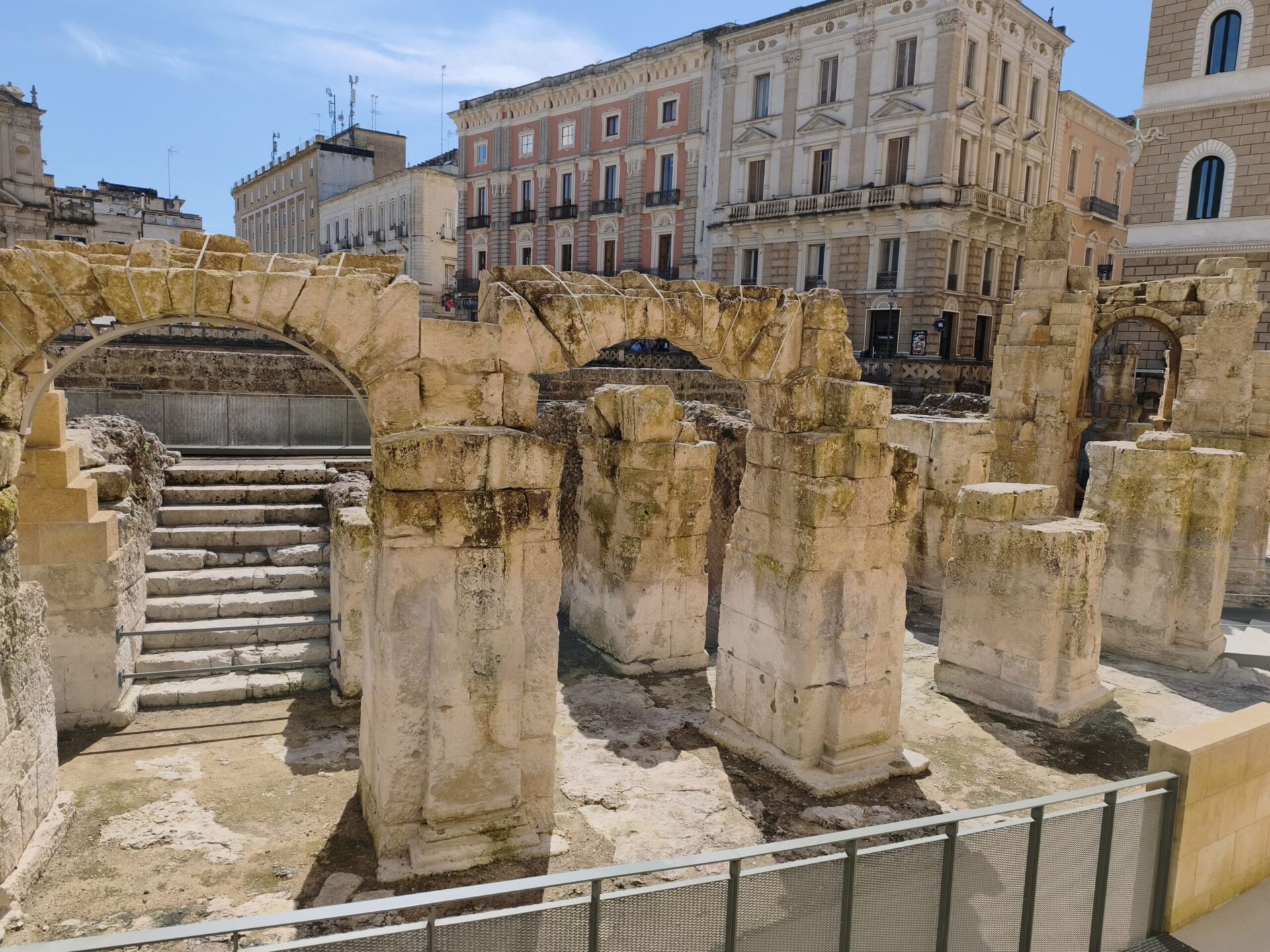
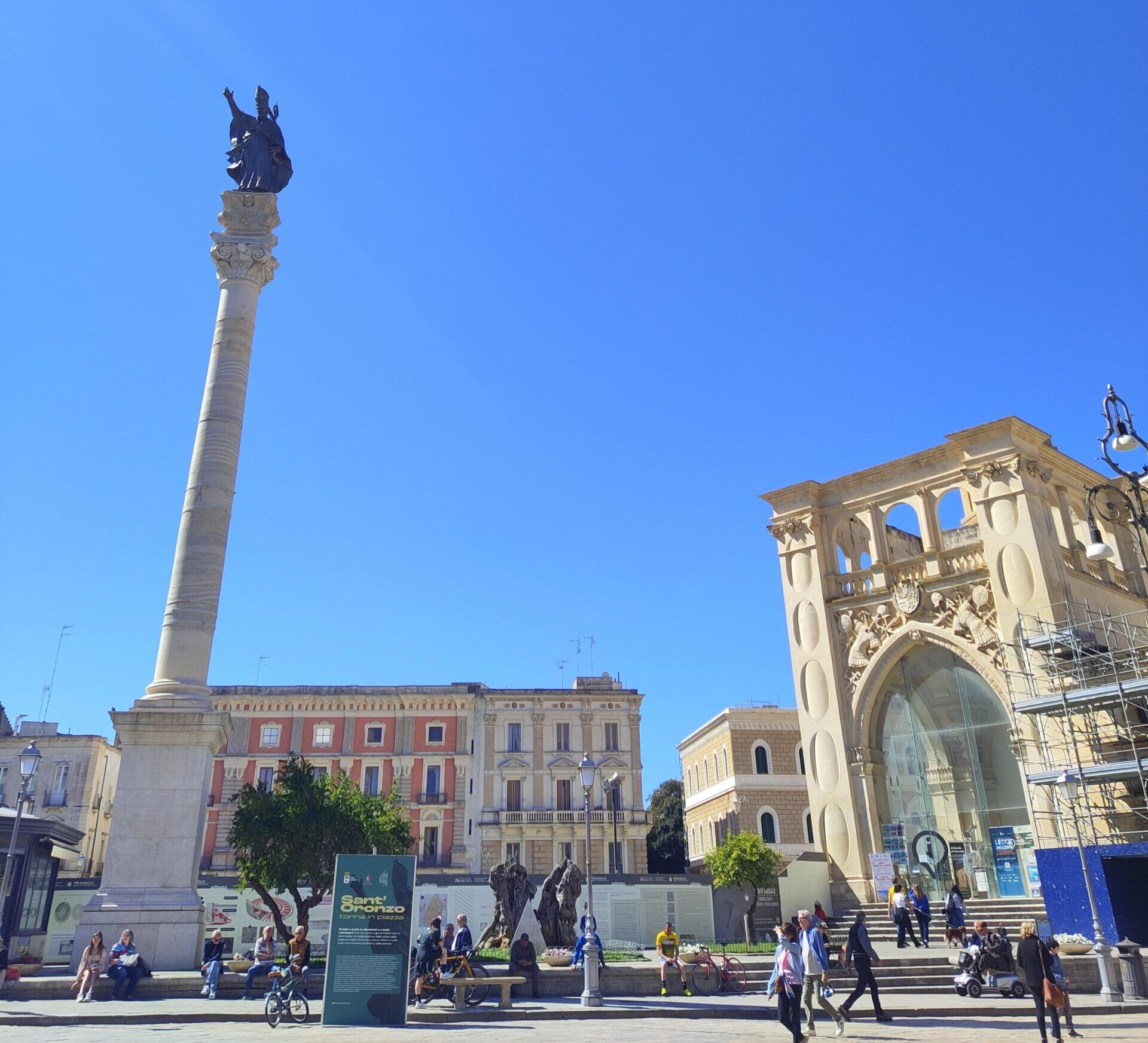
Lecce was born in the 3rd millennium BC with Illyrian settlements on the clay hills of Salento, evolving into a Messapian village in the 8th century BC, with cyclopean defensive walls and hypogean necropolises such as the Ipogeo Palmieri (chamber tombs with dolia). Conquered by Rome in the 3rd century BC, it became Lupiae, a municipium with an amphitheater (102x83 m, elliptical seating for 25,000 spectators, with tiers in local stone) and a Roman theater (seating 6,000), symbols of Augustan prosperity along the Via Appia Traiana. Evangelization dates to the Neronian era with Saint Oronzo, martyr and first bishop-patron, whose relics are kept in the Cathedral. A one day tour Puglia can capture the essence of this remarkable layering of history.
What followed was a construction boom that lasted nearly two centuries, funded by a remarkable coalition of patrons: Counter-Reformation bishops eager to rebuild medieval churches for new liturgical demands, aristocratic families keen to announce their prestige, and monastic orders competing with one another in architectural magnificence. The result was not one great building, but an entire city rebuilt in a single, distinctive style. This makes Lecce a cornerstone of any Tour Valle d'Itria or broader exploration of Puglia's artistic heritage.
First Illyrian settlements on Salento's clay hills
Messapian village with cyclopean walls and hypogean necropolises
Roman conquest; Lupiae becomes a municipium
Construction of amphitheater and theater under Augustus
Norman conquest; Lecce becomes Salento's capital
The Norman and Medieval Era
Sacked by Totila in the 6th century during the Gothic Wars, Lecce was reborn with the Normans in 1053: Goffredo d'Altavilla made it a commercial center and Salento's capital, while Tancred of Lecce (1149-1194, born here) held his princely court in the city. The County of Lecce (1055-1463) saw figures such as Maria d'Enghien (an erudite regent) and Giovanni Antonio Orsini Del Balzo, who issued the municipal statutes of 1445 and erected the Torre del Parco (a square keep in a lush olive grove park). After the Swabians (Frederick II promoted trade), Angevins and Aragonese (from 1463), it became state property under Ferrante I, with a flourishing Gothic-Aragonese period.
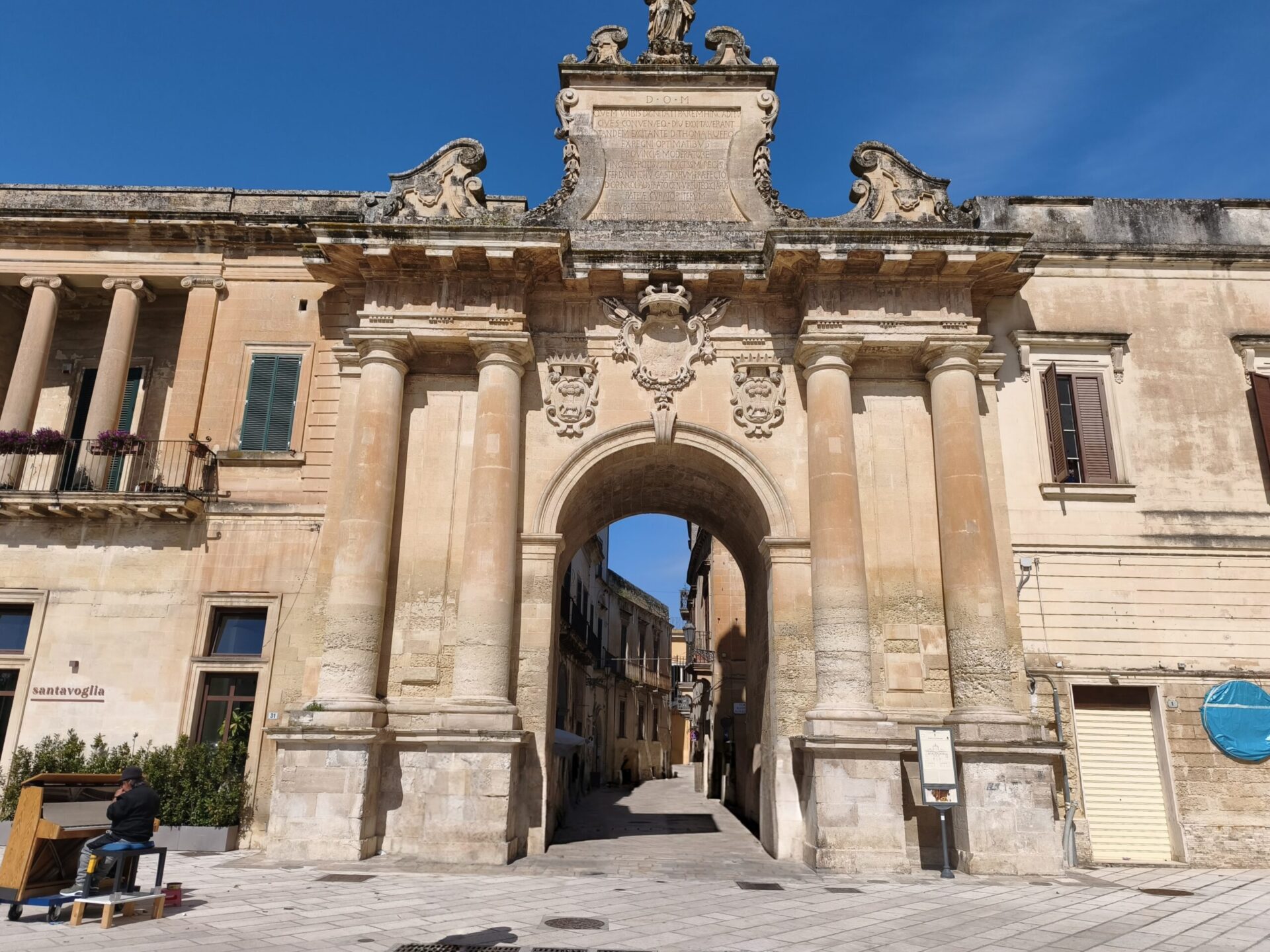
For those enjoying Salento vacation 2026, the golden hour in Lecce — when the pietra leccese seems to glow from within — is an unforgettable experience. These are just some of the many things to see Salento that make the region so unique.
The Baroque Miracle: Stone, Gold, and Faith
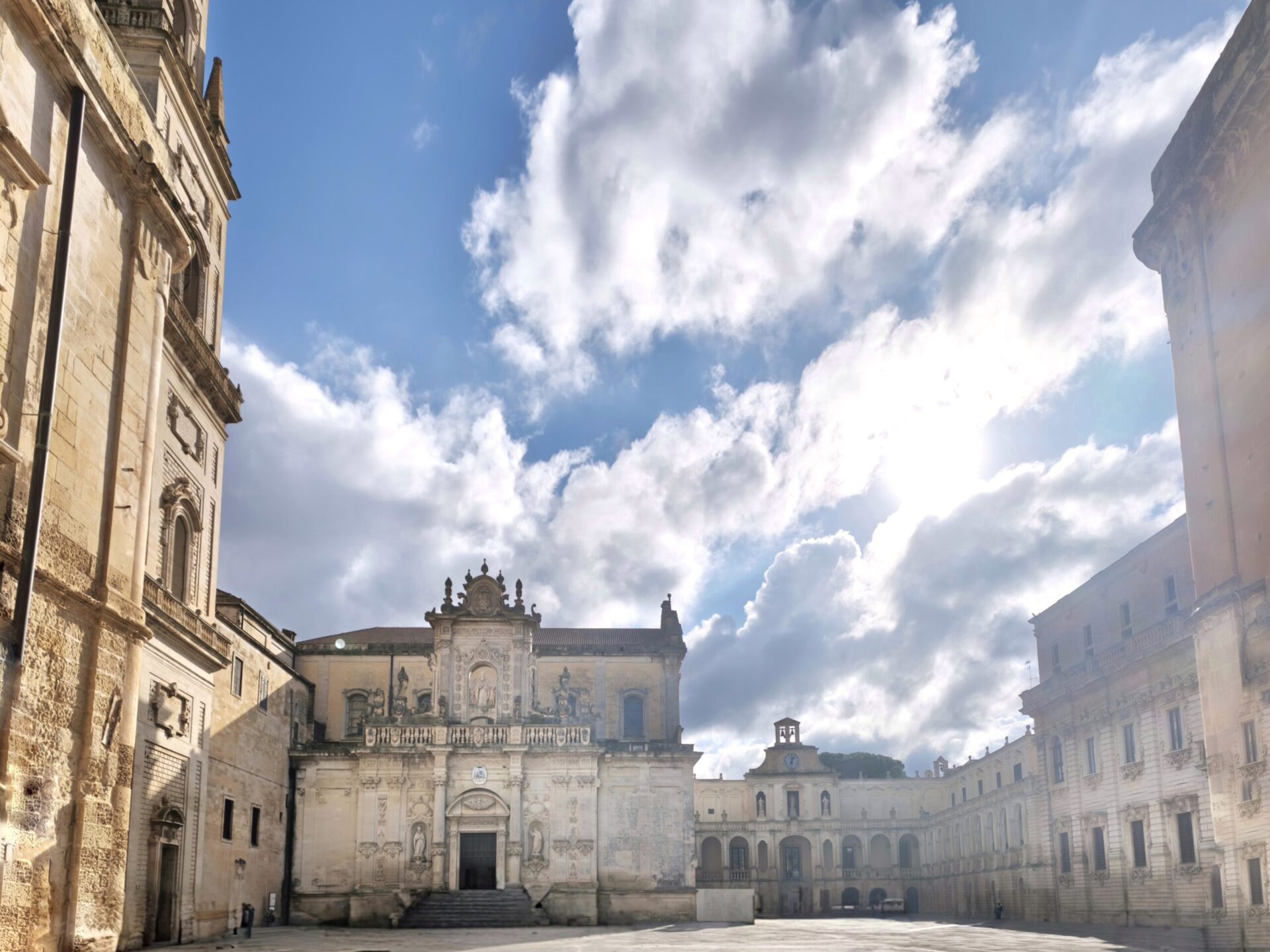
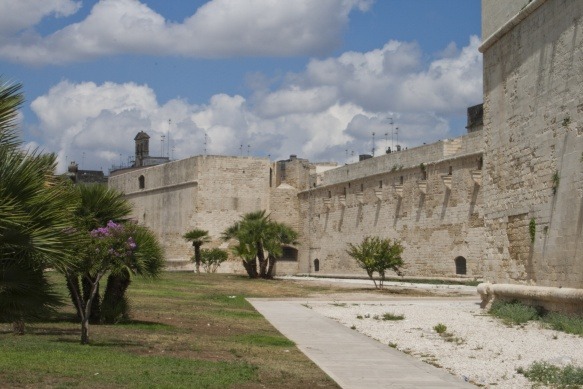
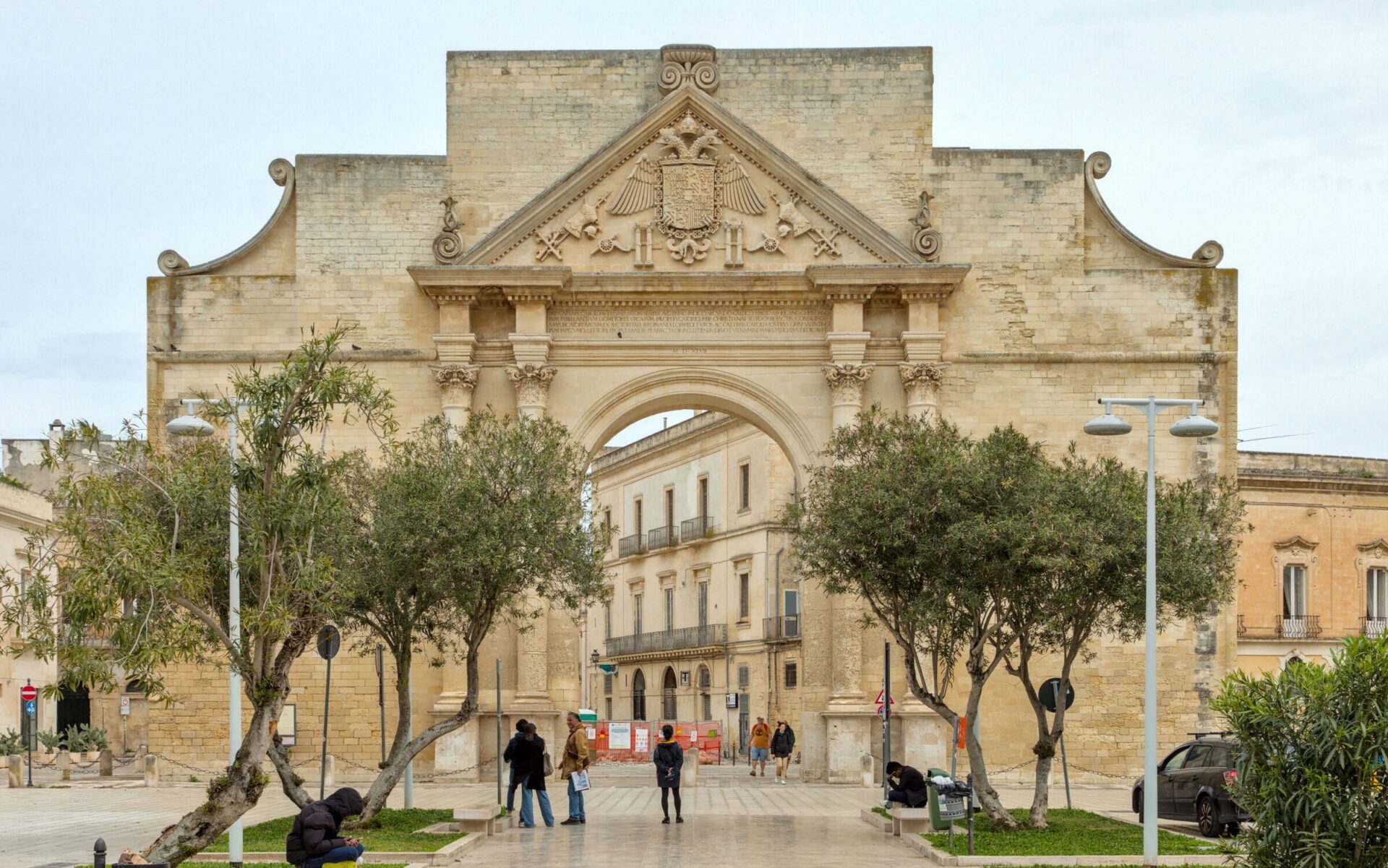
Threatened by Turkish incursions (1480-1537), Charles V fortified the city with the Castle (an Angevin keep expanded with star-shaped bastions) and Porta Napoli (1548, a triumphal arch with three arcades, Corinthian columns, and the Emperor on horseback). Leccese Baroque exploded after Lepanto (1571), flourishing in the 17th and 18th centuries thanks to pietra leccese: the Basilica di Santa Croce (1549-1695, architects Zimbalo-Giannelli, facade with a "mystic rose" rose window, floral pinnacles, angels, and telamons); the Cathedral (1659, Giuseppe Zimbalo "lo Zimbalo", a scenic transept, 70m campanile with trompe-l'œil frescoes); the "closed" Piazza Duomo as a Baroque theater, with the Bishop's Palace and Seminary. Understanding these symbols is key to any guided tour Lecce that aims to unlock the city's secrets.
Basilica di Santa Croce
The definitive Leccese Baroque statement. Three elaborately sculpted portals, a giant rose window surrounded by fantastical beasts, and a façade that required three generations of the Zimbalo family to complete. The decorative program celebrates the Battle of Lepanto.
Cathedral & Campanile
Giuseppe Zimbalo's masterpiece. The 70-meter bell tower with five floors of decorated balustrades defines the city's silhouette. The "closed" piazza is deliberately designed as a stage set.
Seminario (Giuseppe Cino)
The secular masterpiece of the Leccese school. The inner courtyard with its ornamental well covered in carved marine and floral motifs is unforgettable.
Chiesa del Carmine
Another Cino project showing the Leccese style at its most inventive — mixtilinear cornice, serliana above the main portal.
The plague of 1656, escaped through the miraculous ringing of bells by Saint Oronzo, made him patron saint; the revolts of 1647 (anti-tax uprising) and the Carbonari (1821) marked Risorgimento ferment. This unique fusion makes what to see in Salento truly exceptional.
The style passed progressively from sacred to secular. By the late seventeenth century, noble families began commissioning the same artisans who worked on churches to ornament their private palazzi — wrought-iron balconies of Spanish influence, elaborately carved portals, and facades covered in the same dense floral friezes. The whole city became, in effect, a continuous work of art, inviting visitors to explore Salento villages tour beyond the main tourist routes.
Contemporary Lecce: UNESCO Bid and Cultural Renaissance
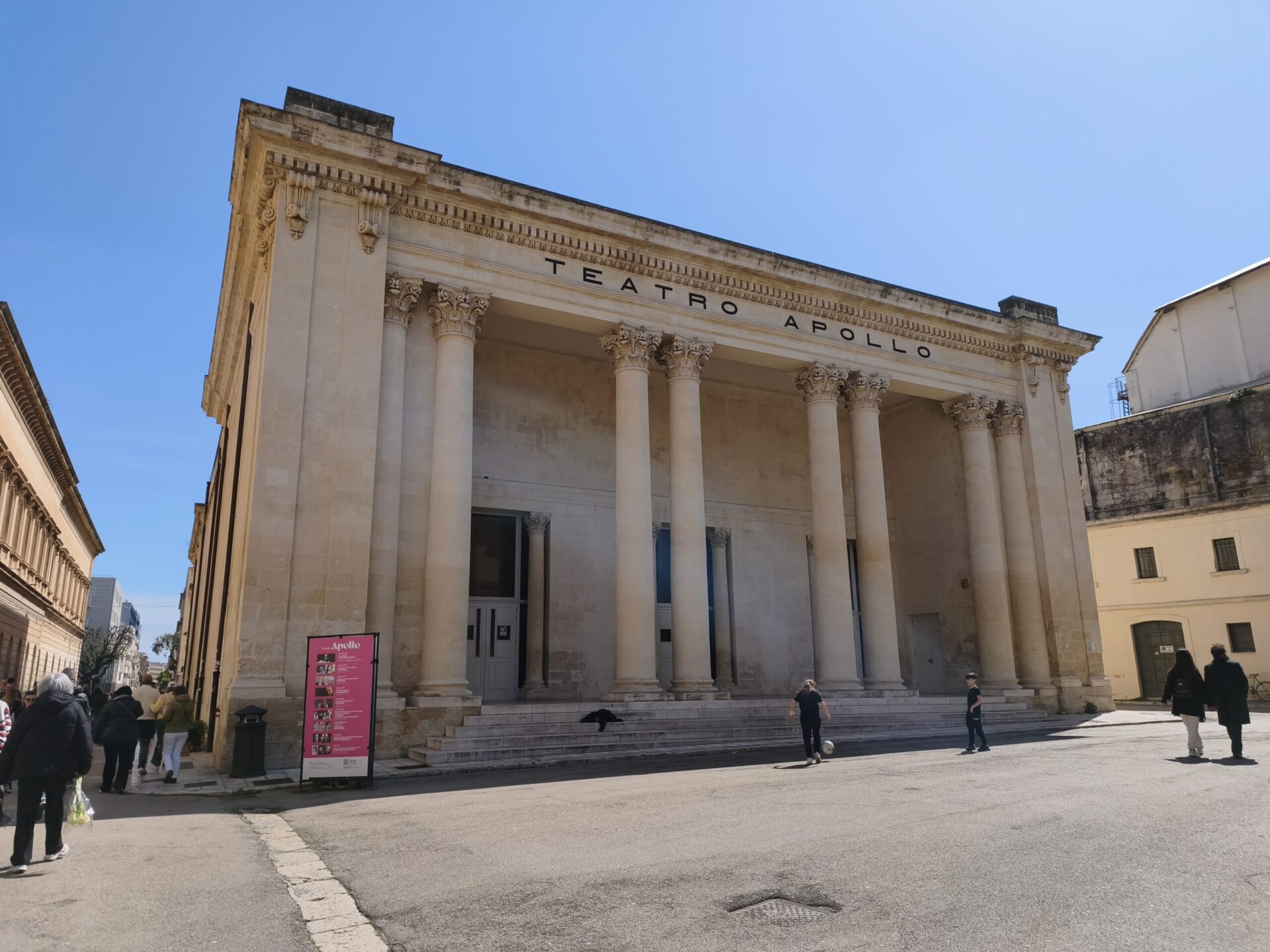
With the Bourbons and Napoleonic rule (1806, prefecture), feudalism was abolished; the Unification of Italy (1860) established the province, with Neoclassical expansion (Teatro Apollo 1861). In the 20th century, Fascist era (palazzi littori) and post-war boom; Capital of Culture 2015, today 94,387 inhabitants with a metropolitan area of 364,000, university hub (University of Salento). Candidate for UNESCO Baroque (2023-2026 project, with a route involving Region/Province) and vibrant with festivals such as Public History (2025, popular rituals) and Yeast Photo Festival (contemporary photography). A Puglia 10 day itinerary should absolutely include these incredible layers of history alongside Baroque masterpieces.
Planning Your Visit to Lecce
Give it at least two full days. The city rewards multiple viewings — buildings reveal different details each time, and the golden light at different hours of the day transforms the facades entirely. This is an essential part of any Puglia holidays experience.
The centro storico is fully pedestrian. Leave your car outside the old walls. A Salento travel guide can help you navigate the best routes.
Best time to visit: Late April through June, or September through October. For Salento vacation 2026, spring and fall offer the perfect balance.
Getting there: Fly into Brindisi (40 minutes) or Bari (90 minutes). Many travelers include Lecce in their Puglia itinerary as the grand finale.
Don't overlook the food. A wine tasting Puglia experience should definitely include Lecce's vibrant food scene — pasticciotto, ciceri e tria, local Negroamaro wines.
A guided tour is genuinely worthwhile. Perfect complement to a Masseria experiences stay in the surrounding countryside.
Lecce is not a detour from Italy. For anyone serious about understanding what European civilization was capable of at the height of its artistic ambition, it is the destination. Whether you're planning Puglia holidays or a deep dive into the region's heritage, this city will leave you breathless.
For those seeking authentic Puglia experiences and unforgettable journeys through Italy's most extravagant architectural tradition, Lecce serves as the perfect starting point — and the perfect destination. From Messapian walls to Baroque facades, from Roman amphitheaters to contemporary festivals, the city offers a journey through 28 centuries of civilization carved in golden stone.
Lecce: The Complete Guide to Puglia's Baroque Capital
If you too wish to witness these beauties of Puglia, book your tour with Salentowinetour. Contact us via WhatsApp for a personalized experience crafted around your passions.
Book via WhatsApp