
Lecce, Masterpiece of Baroque: Stone, Gold, and Glory
Inside the Baroque fever dream of Lecce,
Italy's best-kept secret
North Americans flock to Rome, Florence, and Venice. But hidden deep in the heel of Italy's boot sits a city that out-carves them all — a place where an entire skyline was sculpted by hand, in honey-gold stone, over the course of nearly two hundred years. For those planning Puglia holidays or seeking an authentic Salento travel guide, Lecce is an unmissable destination.
Most travelers to Italy have a checklist. The Colosseum. The Uffizi. The canals of Venice. But ask anyone who has wandered the narrow lanes of Lecce — a small city tucked at the very tip of Italy's Apulian peninsula — and they'll tell you the same thing: nothing quite prepares you for it. Here, every church façade is an obsession, every palazzo a provocation, every stone surface a riot of carved fruit, angels, sea monsters, and floral garlands that seem to defy the very nature of limestone. A Lecce guided tour is the best way to uncover these hidden treasures, making it a highlight of any Salento road trip.
Lecce is routinely called the "Florence of the South" — though the locals, justifiably proud, will remind you that Florence never had anything quite like this. What the city built between roughly 1571 and 1750 is something entirely its own: Barocco Leccese, a style so particular, so obsessively ornate, and so rooted in its singular local material that art historians give it its own name. For travelers seeking authentic Puglia experiences, Lecce offers a journey into the heart of Salento's artistic soul.
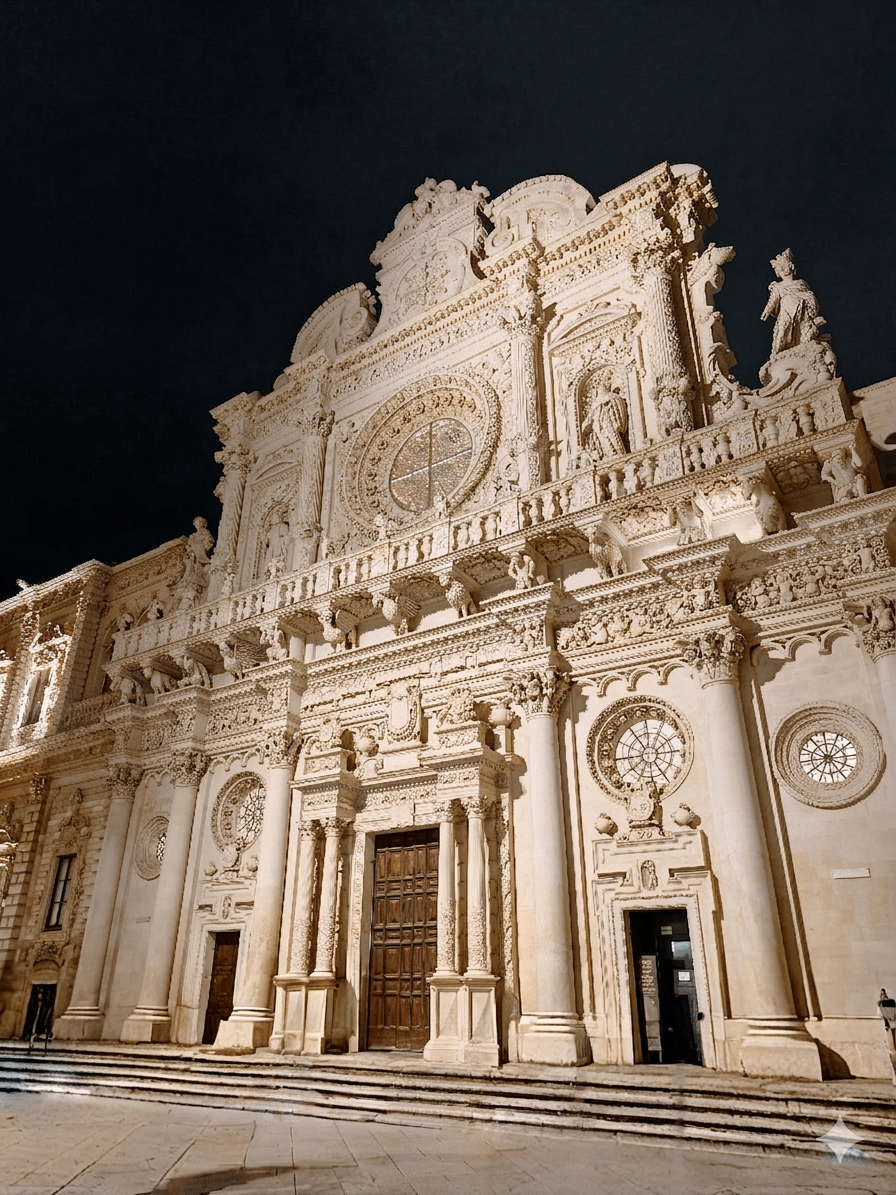
A City Reborn After a Sea Battle
The story of Lecce's Baroque begins not with an architect or a bishop, but with a naval cannon. In October 1571, the allied Christian fleet of the Holy League — ships from Spain, Venice, the Papal States, and Genoa — crushed the Ottoman navy at the Battle of Lepanto, off the coast of Greece. The victory ended, almost overnight, the existential threat that Turkish corsairs had posed to the cities of southern Italy for generations.
For Lecce, which huddled behind the massive walls of the Castello di Carlo V, the relief was profound. The Spanish had already made the city the administrative capital of the Terra d'Otranto province. Now, with peace secured and the threat of raids lifting, decades of pent-up ambition — religious, civic, and aristocratic — poured into stone. A one day tour Puglia can capture the essence of this remarkable transformation, fitting perfectly into any Puglia itinerary.
What followed was a construction boom that lasted nearly two centuries, funded by a remarkable coalition of patrons: Counter-Reformation bishops eager to rebuild medieval churches for new liturgical demands, aristocratic families keen to announce their prestige, and monastic orders competing with one another in architectural magnificence. The result was not one great building, but an entire city rebuilt in a single, distinctive style. This makes Lecce a cornerstone of any Tour Valle d'Itria or broader exploration of Puglia's artistic heritage.
Battle of Lepanto ends Ottoman threat. Lecce enters an era of unprecedented peace and prosperity under Spanish rule.
Construction of the Basilica di Santa Croce spans nearly a century and three generations of the Zimbalo family.
The Duomo is rebuilt; its landmark campanile rises 72 meters, defining the city's silhouette.
Giuseppe Cino completes the Seminario, one of the finest secular Baroque buildings in southern Italy.
The Baroque impulse wanes, leaving behind a living museum frozen at the height of its extravagance.
The Stone That Made Everything Possible
You cannot understand Lecce's Baroque without understanding pietra leccese — Lecce stone. Quarried from the limestone beds beneath the Salento peninsula, it is in geological terms a relatively soft, fine-grained calcarenite. In artistic terms, it is a miracle.
Where Roman travertine demands blunt forms and Florentine pietra serena imposes austerity, pietra leccese surrenders willingly to the chisel. A skilled stonecutter — a carparo, as the local masters were called — could carve it with almost the same ease as wood, coaxing curling acanthus leaves, three-dimensional cherubs, and intricate heraldic shields from a single block. The stone's warm amber-gold color deepens at sunset, turning every facade into something that seems to glow from within. For those enjoying Salento vacation 2026, the golden hour in Lecce is an unforgettable experience.
After carving, masons developed a distinctive hardening technique: soaking freshly cut stone in a mixture containing whole milk, which reduced its porosity and helped protect the delicate carved surfaces from the salty Mediterranean air. The result, despite centuries of exposure, remains astonishing in its detail and preservation. This is just one of the many things to see Salento that make the region so unique.
The Baroque style was originally coined as a term of ridicule — critics called it "extravagant," "full of excess and drama." In Lecce, those are unambiguous compliments.
A Vocabulary Carved in Stone
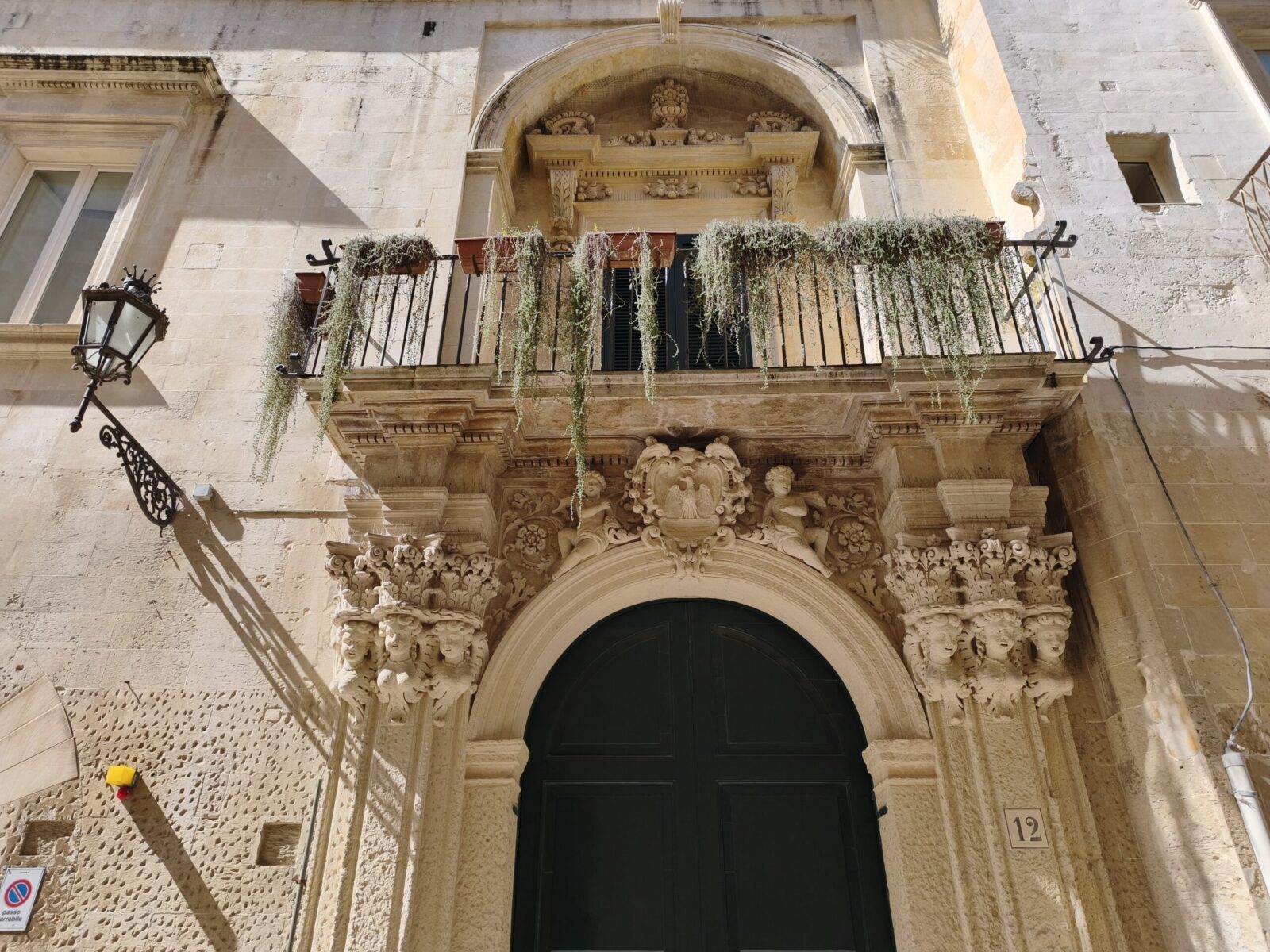
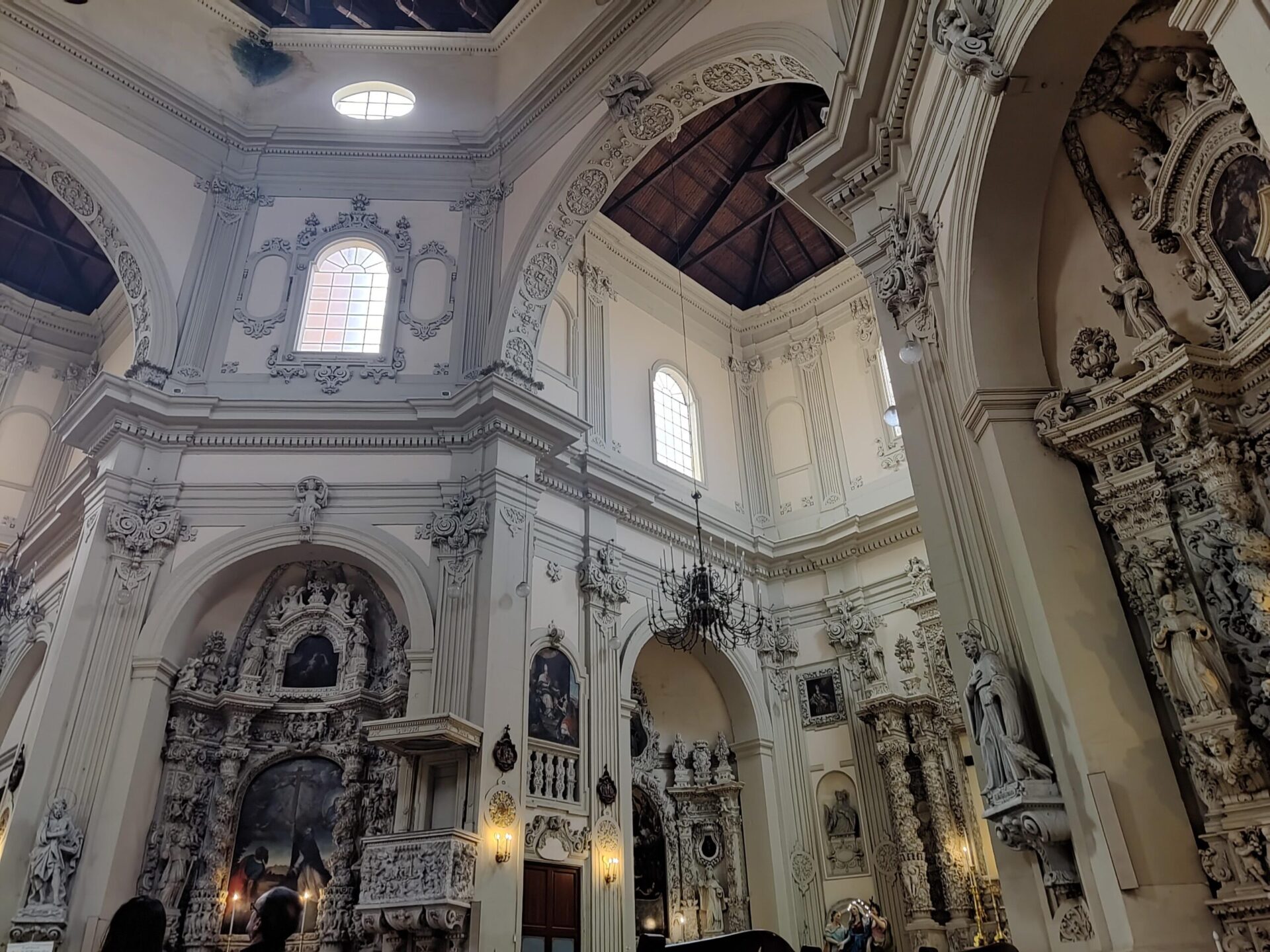
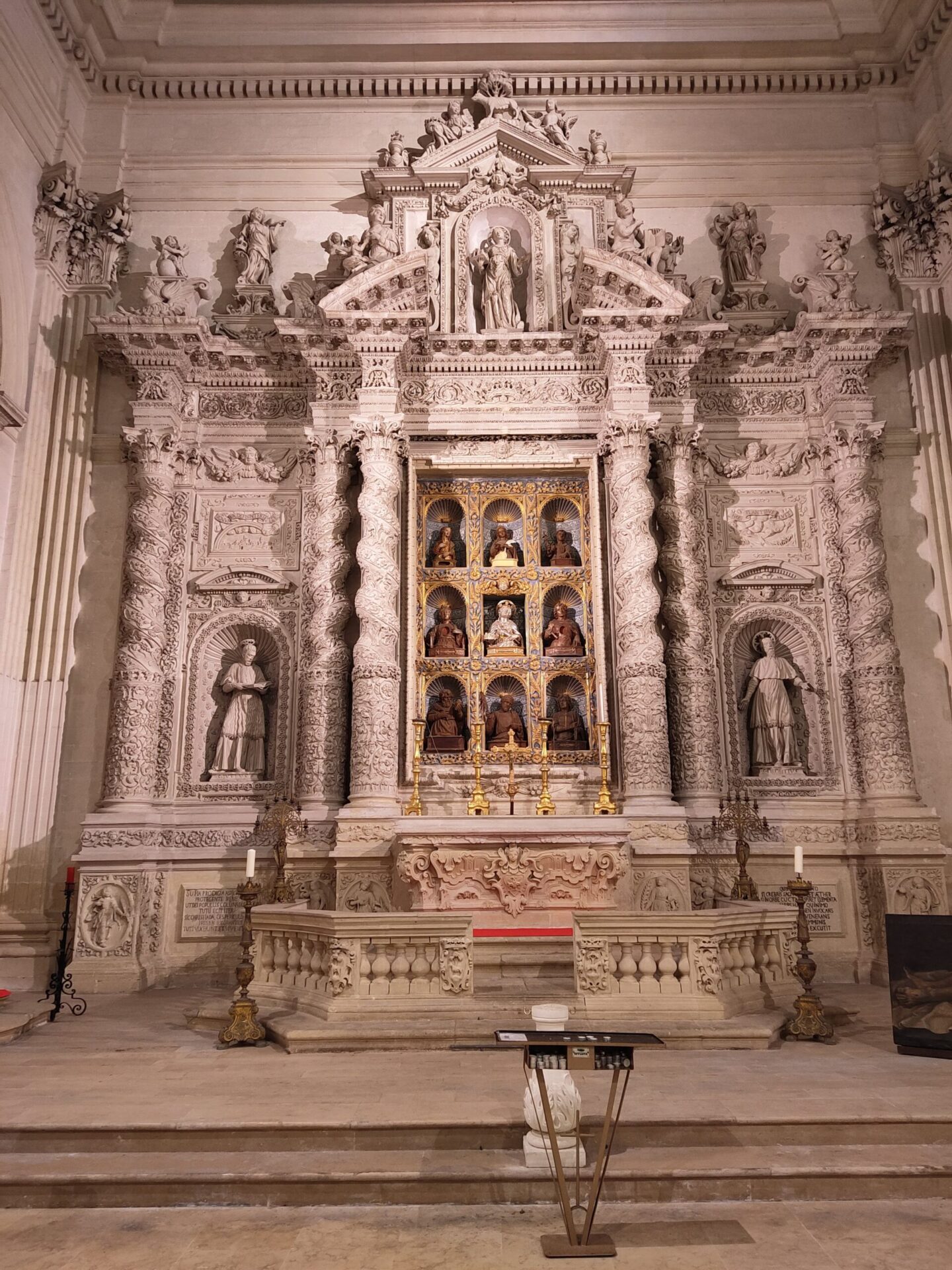
Walk any block of Lecce's historic center and you will encounter the same vocabulary of motifs, deployed with inexhaustible inventiveness. Each element carried meaning to a seventeenth-century Catholic audience — a symbolic language as legible as words. Understanding these symbols is key to any guided tour Lecce that aims to unlock the city's secrets.
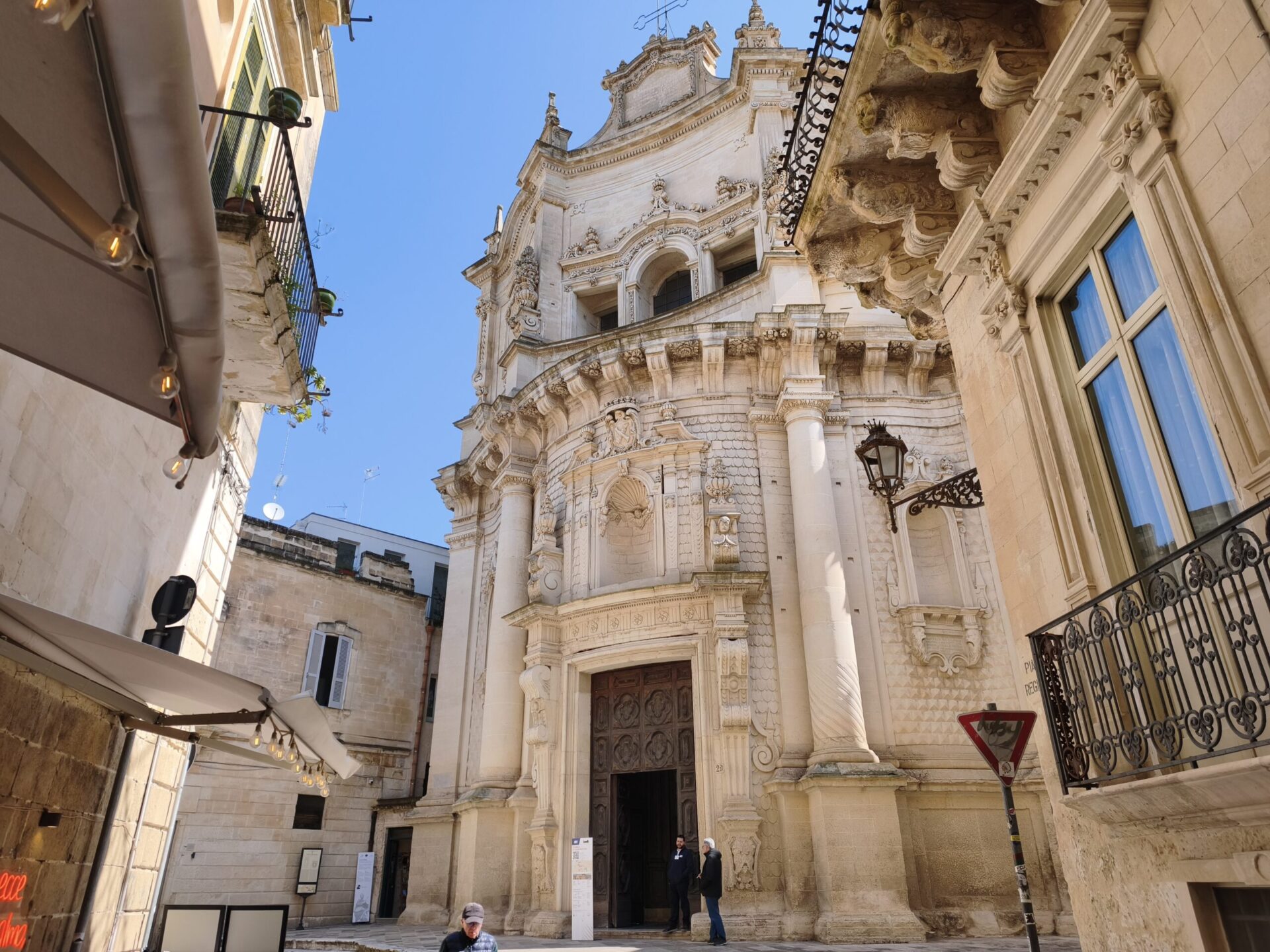
The style passed progressively from sacred to secular. By the late seventeenth century, noble families began commissioning the same artisans who worked on churches to ornament their private palazzi — wrought-iron balconies of Spanish influence, elaborately carved portals, and facades covered in the same dense floral friezes. The whole city became, in effect, a continuous work of art, inviting visitors to explore Salento villages tour beyond the main tourist routes.
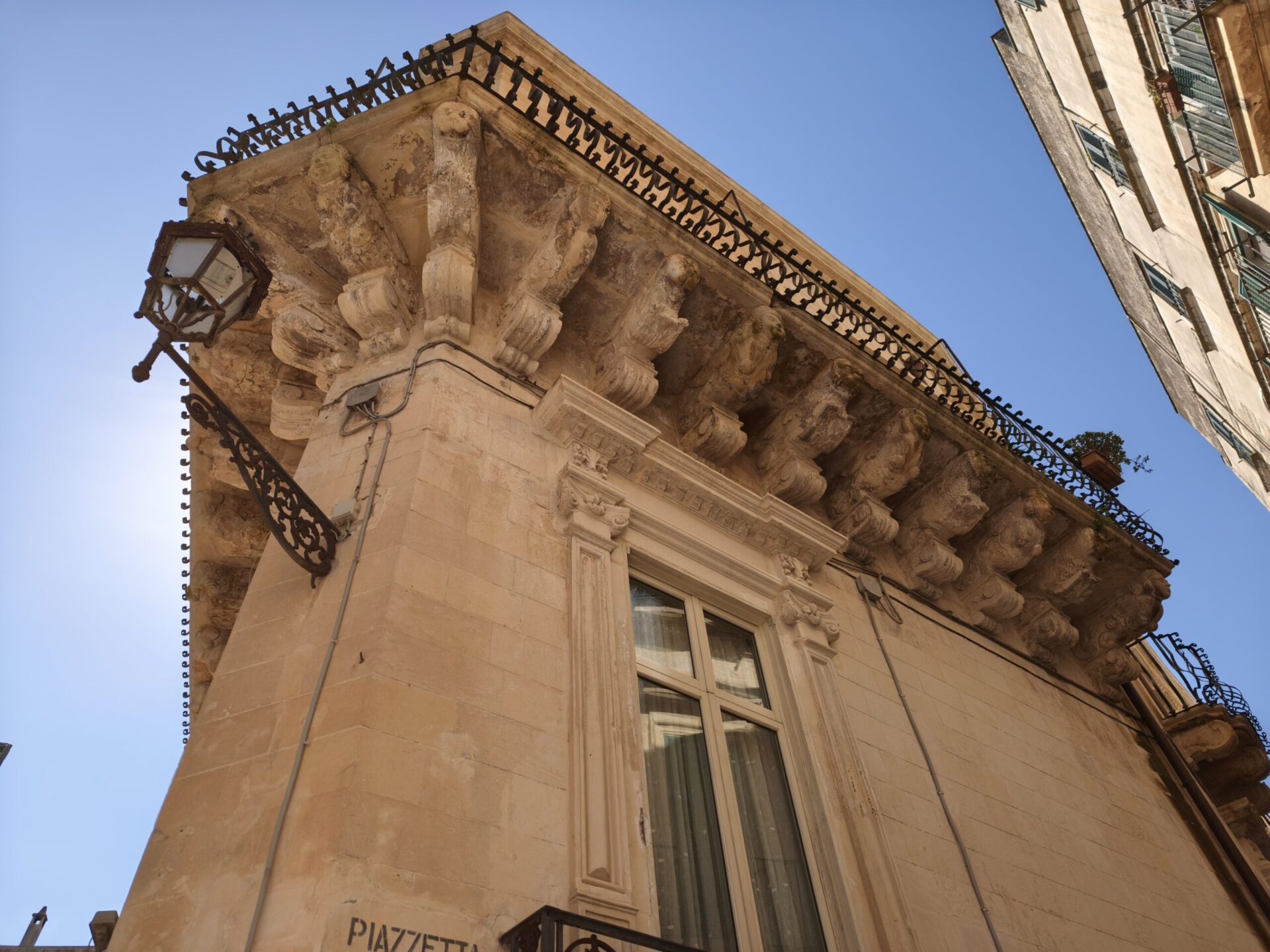
Some historians debate whether Lecce's architecture is truly "Baroque" in the strict Roman sense — noting that its underlying building forms remain relatively flat and medieval, lacking the swooping curves that characterize the work of Francesco Borromini. The honest answer may be that Lecce invented something distinct: spectacular ornamental theater applied to solid, traditional structures. "Baroque icing on a medieval cake," as one architectural writer memorably put it — though in Lecce, the icing is so elaborate the cake barely matters. This unique fusion makes what to see in Salento truly exceptional.
The Masters Who Made It
The most celebrated and imitated architect of the Leccese school, Zimbalo left his mark on nearly every corner of the city. His crowning achievement is the façade of the Basilica di Santa Croce — a surface so densely populated with carved figures, animals, and floral explosion that first-time visitors often simply stop on the street and stare, mouths open. He also remodeled the Palazzo Vescovile (Bishop's Palace), filling it with the angels and symbolic motifs that would become his signature. So dominant was his influence that lesser craftsmen throughout the city spent generations imitating his innovations.
Where Zimbalo was pure exuberance, Cino brought a slightly more refined sensibility to the Leccese formula — though "refined" is entirely relative when applied to this style. He designed the Chiesa di Santa Chiara, the Carmine church, and — his most enduring legacy — the Seminario, commissioned by Bishop Antonio Pignatelli. Cino was also instrumental in spreading the Leccese Baroque style to towns throughout the Salento peninsula, effectively making an entire region look like a single, coherent architectural statement.
The pioneering generation: it was Francesco Antonio who first developed the complex decorative techniques — multiple layered portals, interlocking altarpieces, surfaces that reward sustained looking with new discoveries — that his descendants and imitators would elaborate for the next hundred years. He planted the seed; the rest of Lecce grew it into a forest.
The Masterworks: Where to Look First
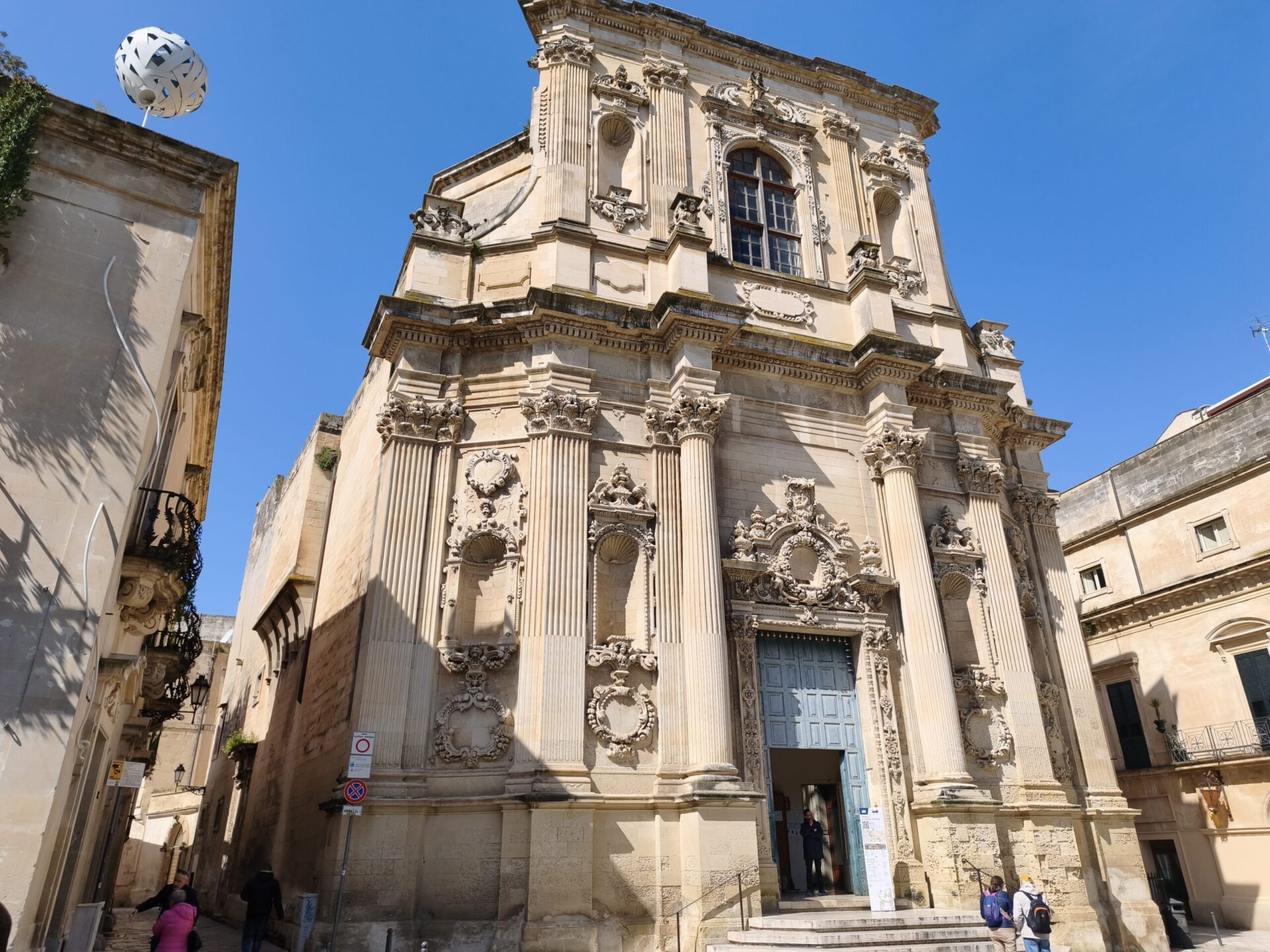
Basilica di Santa Croce
The definitive Leccese Baroque statement. Three elaborately sculpted portals, a giant rose window surrounded by fantastical beasts, and a façade that required three generations of the Zimbalo family to complete. The decorative program on the upper section celebrates the Battle of Lepanto — the naval victory that made all of this possible.
Piazza del Duomo & Cathedral
One of the most theatrical urban spaces in southern Italy. The enclosed piazza is deliberately designed as a stage set — the cathedral, its 72-meter campanile with five floors of decorated balustrades, the bishop's palace and seminary all compose together. Enter through the narrow side street to experience the full dramatic reveal.
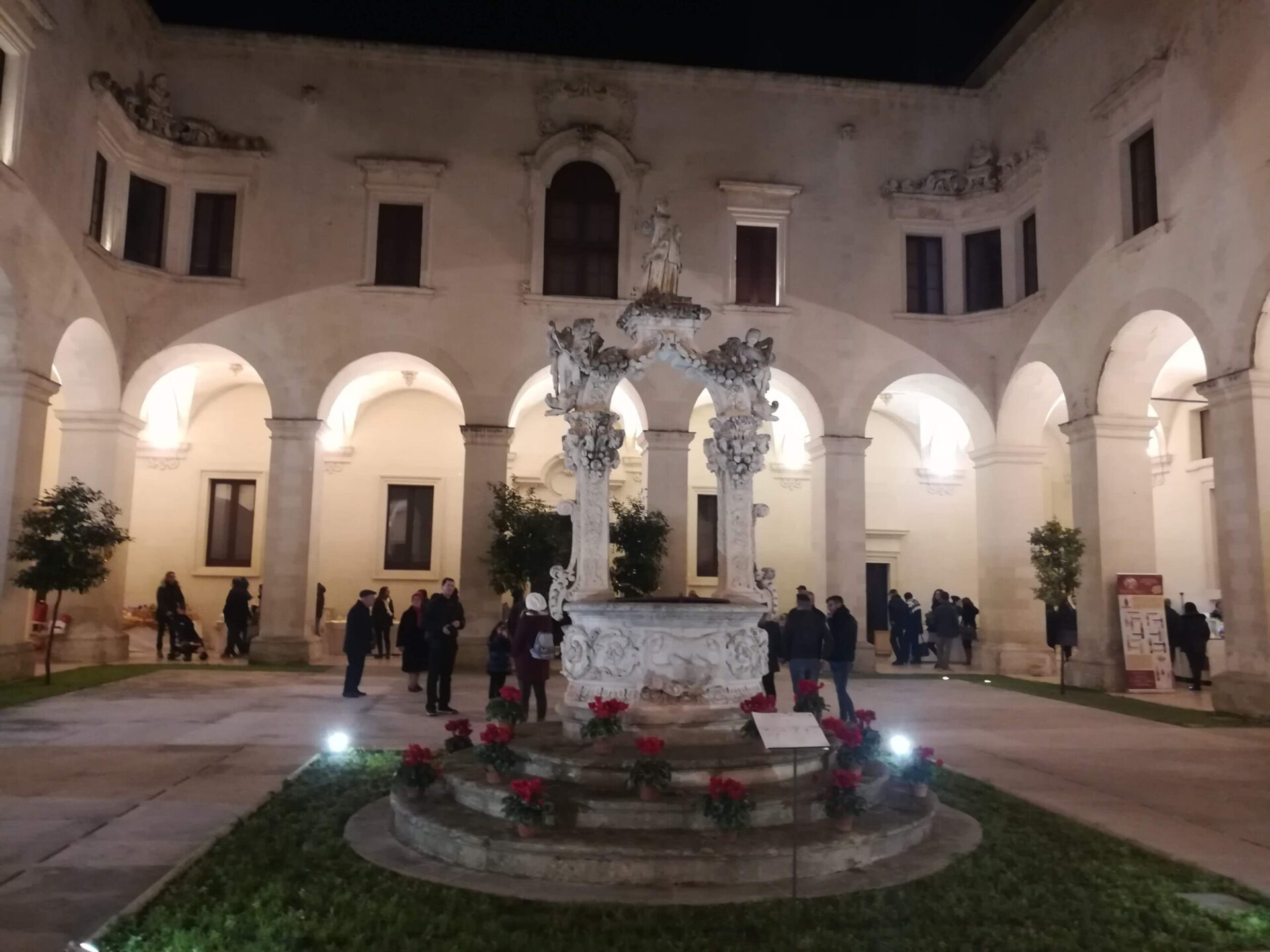
Seminario (Giuseppe Cino)
The secular masterpiece of the Leccese school. Cino's façade is extraordinary, but the inner courtyard — with its ornamental well covered in carved marine and floral motifs — is the room that stays with you. The well alone is worth the detour.
Chiesa del Carmine
Another Cino project, set within a complex that originally included a Carmelite convent. The mixtilinear cornice, topped by a high gable, and the richly ornamented serliana above the main portal show the Leccese style at its most inventive and self-assured.
Basilica del Rosario
Giuseppe Zimbalo's final work — built when he was already in his seventies — is a quieter, more contemplative expression of his genius. The interior is remarkable: five richly decorated side altars along each nave, a star-vaulted apse, and an intimacy that Santa Croce, for all its splendor, cannot offer.
The Palazzo Quarter
Beyond the churches, trace the private ambitions of Lecce's nobility: Palazzo Palmieri with its telamones (male caryatids) and floral coats of arms; Palazzo Marrese's cortile with twisted columns; Palazzo Tamborino Cezzi's dense vegetable friezes. These are working buildings, still privately owned — their façades are free to view from the street.
Beyond the Baroque: Ancient Layers
Lecce's story does not begin with the Baroque. The city was founded by the Messapians — an ancient Italic tribe — before becoming a Roman colony in the third century BC, known then as Lupiae. Right in the middle of the modern city, in Piazza Sant'Oronzo, you can look down into a partially excavated Roman amphitheater from the 2nd century AD that once held up to 25,000 spectators for gladiatorial games. The juxtaposition — Roman ruins beside Baroque churches on a pedestrian piazza where Italians drink their evening aperitivo — is one of Lecce's most quietly remarkable qualities.
A Roman theater, smaller but equally well preserved, survives nearby. And throughout the medieval street layout — there is no boulevard, no grid, just an organic tangle of lanes that cause even major monuments to appear and disappear from view unexpectedly — you encounter the bones of a city that was already old when its most famous chapter began. For history enthusiasts, a Puglia 10 day itinerary should absolutely include these incredible Roman remnants alongside Baroque masterpieces.
Planning Your Visit
Give it at least two full days. The city rewards multiple viewings — buildings reveal different details each time, and the golden light at different hours of the day transforms the facades entirely. Early morning and the hour before sunset are magical. This is an essential part of any Puglia holidays experience.
The centro storico is fully pedestrian. Leave your car outside the old walls. Everything within is a short walk — the entire historic center is compact, a little over a kilometer across, designed for lingering on foot. A Salento travel guide can help you navigate the best routes.
Best time to visit: Late April through June, or September through October. July and August are hot and crowded. Winter is quiet and atmospheric, with mild temperatures by North American standards. For Salento vacation 2026, spring and fall offer the perfect balance.
Getting there: Fly into Brindisi (40 minutes by train or car) or Bari (90 minutes). Lecce is the terminus of the main rail line from Rome and Naples, making it easy to add to a broader Italian itinerary. Many travelers include Lecce in their Puglia itinerary as the grand finale of their journey.
Don't overlook the food. Lecce is the capital of Salento, one of Italy's great undiscovered culinary regions. Try pasticciotto (a warm custard pastry) for breakfast, ciceri e tria (chickpea pasta) for lunch, and local Negroamaro wines in the evening. The aperitivo culture here is serious and generous. A wine tasting Puglia experience should definitely include Lecce's vibrant food scene.
A guided tour is genuinely worthwhile. The symbolism embedded in the carvings — the Counter-Reformation theology, the noble family rivalries, the layers of meaning in each motif — is substantially richer with a knowledgeable local guide. Several English-language tours operate daily. This is the perfect complement to a Masseria experiences stay in the surrounding countryside.
There is a line attributed to no one in particular but repeated by everyone who loves this city: that Lecce is what happens when a culture decides, collectively, that ordinary is not enough. For 180 years, a small city at the edge of Europe looked at plain limestone and refused to leave it plain. The result is still there, still golden in the afternoon sun, still astonishing strangers who arrive expecting a footnote and find instead an entire world. For those seeking authentic Puglia experiences and unforgettable journeys through Italy's most extravagant architectural tradition, Lecce serves as the perfect starting point — and the perfect destination.
Lecce, Masterpiece of Baroque: Stone, Gold, and Glory
If you too wish to witness these beauties of Puglia, book your tour with Salentowinetour. Contact us via WhatsApp for a personalized experience crafted around your passions.
Book via WhatsApp